

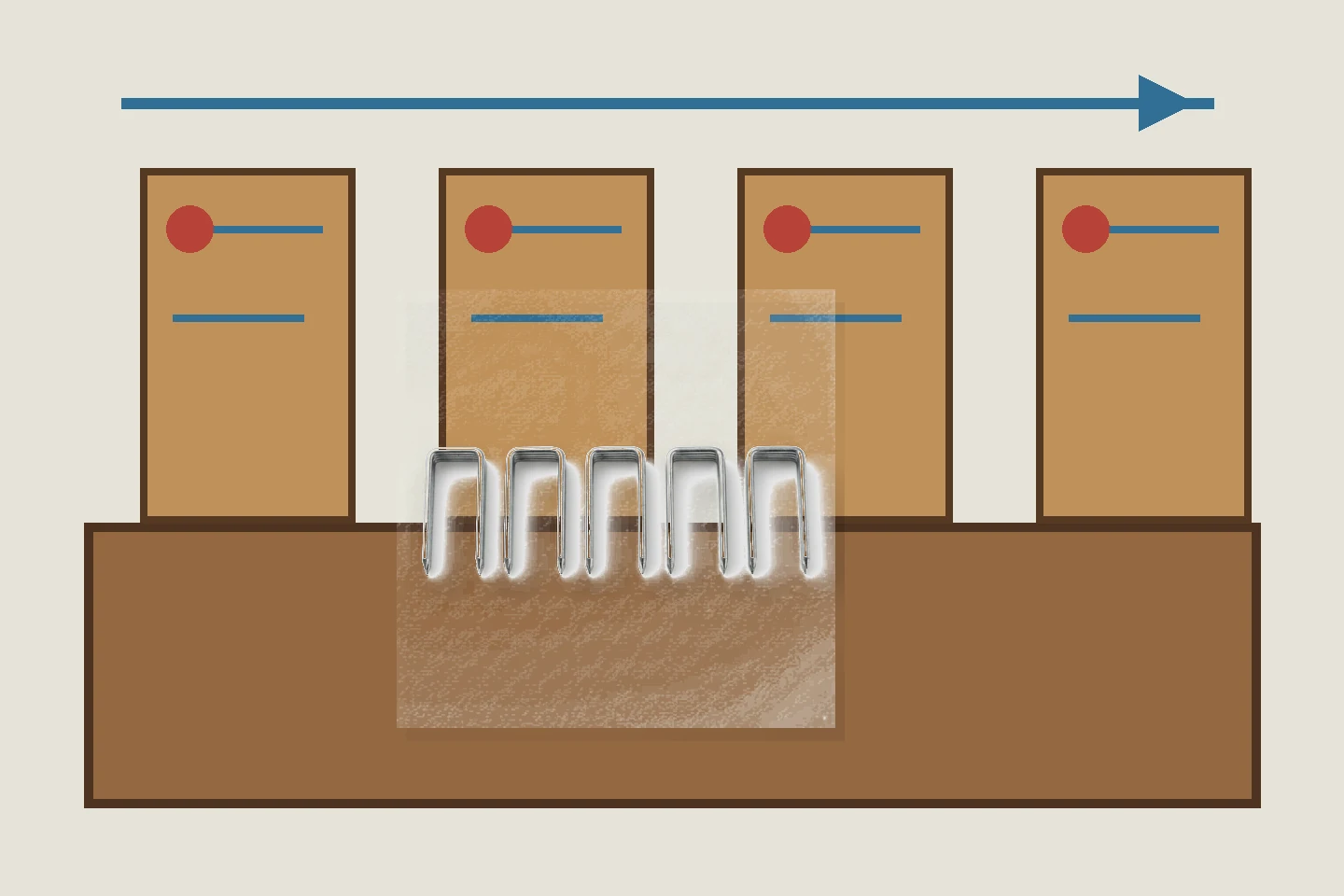
Pneumatic nails packaging requirements should protect the fastener, preserve collation, keep lot identity visible, and make receiving, storage, and line loading predictable. A strong product can still create claims when coils deform, strips mix, labels disappear, cartons collapse, or moisture reaches the fastener.
ProAirNails recommends approving the unit pack, inner pack, carton, pallet, label, handling marks, and transport assumptions as one distribution system.
Start with the distribution route
Record fastener type, coil or strip format, carton quantity, pallet pattern, stacking height, warehouse conditions, handling equipment, destination, transit exposure, retailer or importer labels, and receiving process. Packaging should reflect the route, not only the factory packing bench.
Use a packaging decision table
| Packaging layer | Buyer should verify | Failure to prevent |
|---|---|---|
| Fastener carrier | Collation, welds, count, protection | Feed failure |
| Inner pack | Size, support, moisture barrier | Mixed or damaged product |
| Carton | Strength, label, quantity, closure | Collapse or lost identity |
| Pallet | Pattern, wrap, corner protection | Shift or crushing |
| Documents | Lot, SKU, handling, destination | Receiving delay |
Protect coils and strips
Define how coils, strips, cartons, and separators resist impact, vibration, compression, abrasion, moisture, and temperature changes. Inspect the fastener carrier after transport, not only the outer carton. Record damaged welds, bent strips, loose coils, broken boxes, and exposed product.
Make labels readable and stable
Show SKU, dimensions, material, finish, collation, quantity, lot, production date, supplier, purchase order, carton sequence, destination, and required handling marks. Confirm label language, barcode or scan requirements, adhesive, print durability, and placement before bulk packing.
Compare packing scenarios
| Scenario | Priority | Evidence |
|---|---|---|
| Industrial bulk | Fast receiving and tool loading | Count, lot, carton strength |
| Private label | Brand and retail presentation | Artwork and approval sample |
| Export pallet | Compression and handling route | Stack, wrap, marks, photos |
| Multi-SKU shipment | Separation and scan accuracy | Carton map and pallet list |
Use handling marks deliberately
The ISO 780:2015 page describes graphical symbols for handling and storage of distribution packages. The ASTM F1667/F1667M page can support applicable fastener terminology. Use each reference only where it fits the actual route, and align marks with carrier, warehouse, and receiving instructions.
Keep packaging and quality linked
Open sample cartons from several pallet positions. Check product identity, collation, count, moisture, corrosion, carrier damage, label, and carton condition. A packaging inspection should be connected to the same lot and release record as the fastener inspection.
Verify the carton and pallet drawing
Approve carton dimensions, internal supports, coil or strip orientation, closure, label location, pallet footprint, stacking height, wrap, corner protection, and carton sequence. Photograph the approved arrangement from the sides and top so receiving can identify a changed pack without guessing.
Review claims and rework
Record how a damaged carton, missing coil, unreadable label, mixed SKU, wet pack, or broken carrier is reported. Define containment, evidence, replacement, credit, and root-cause timing. The goal is not only a stronger carton; it is a faster and more traceable response when the route fails.
Use a receiving checklist
- Match carton, pallet, and purchase-order labels.
- Photograph damage before opening.
- Check lot and quantity against the pack list.
- Inspect collation and moisture at opening.
- Release or quarantine by documented decision.
Plan warehouse and line loading
Document carton orientation, stacking limit, first-in-first-out rule, opening method, empty-pack disposal, coil or strip transfer, and tool loading. Packaging that saves factory labor but creates awkward line handling can increase the buyer's installed cost.
Measure packaging value
Compare cartons, separators, labels, pallets, wrap, storage, damage, receiving time, line loading, repacking, disposal, shortages, and claims. Keep pneumatic nails packaging requirements tied to usable product delivered to the line rather than carton price alone.
Approve the transport sample
Send a representative packed unit through the intended handling route or a documented simulation. Photograph the package before dispatch, at receipt, and after opening. Record damage, moisture, label readability, lot identity, and any change needed before the first shipment.
Request a packaging specification
ProAirNails can review pneumatic nails, coil nails, and staples with your packaging and RFQ requirements. Send carton dimensions, labels, pallet pattern, destination, annual volume, and handling route.
Include carton drawings, label artwork, pallet photos, expected stacking, warehouse limitations, and a sample receiving report so the packaging discussion starts with evidence rather than a generic request for “export packing.”
State the evidence boundary
One transport sample cannot prove every carrier, warehouse, climate, handling event, carton lot, or receiving practice. Preserve the approved pack, label artwork, photos, lot map, exceptions, and authorization. Reopen affected checks after a packaging or route change.
For pneumatic nails packaging requirements, keep the approved artwork, pack drawing, carton test, pallet photo, lot map, and transport result together. ProAirNails can then compare a proposed new carton or label against a known receiving outcome instead of approving it by appearance alone.
That evidence set gives the buyer a fourth reference point for pneumatic nails packaging requirements when comparing a standard carton with a private-label or multi-SKU pack.
Use the same record for the first reorder, because a changed carton supplier, label printer, pallet pattern, or carrier can alter the result without changing the nail itself.
FAQ
What is the most important packaging layer?
The complete system matters: carrier, inner pack, carton, pallet, label, handling, and receiving process interact.
Why protect collation?
Broken welds, bent strips, loose coils, or carrier fragments can create feed interruptions even when dimensions are correct.
What belongs on a carton label?
Include SKU, dimensions, finish, collation, quantity, lot, date, supplier, purchase order, destination, and applicable handling information.
Should every package use ISO symbols?
Use applicable symbols deliberately and align them with actual handling instructions and route requirements.
How should multi-SKU pallets be controlled?
Use a carton map, visible separation, scan-ready labels, pallet list, and receiving checks that preserve lot identity.
What should a transport sample show?
It should show the packed unit before dispatch, after receipt, and after opening, including damage and label condition.
How does packaging affect cost?
Include receiving labor, storage, repacking, damage, line loading, disposal, shortages, claims, and usable delivered product.
What changes reopen approval?
Review carton, label, pallet, wrap, quantity, fastener, supplier lot, carrier, warehouse, route, or handling changes.
What should block shipment?
Block for unknown lot, unreadable label, damaged carrier, wet or collapsed carton, unsafe stacking, or missing documents.
What supports an accurate packaging quote?
Send SKU mix, pack quantity, carton and pallet needs, artwork, destination, route, volume, handling, and receiving rules.