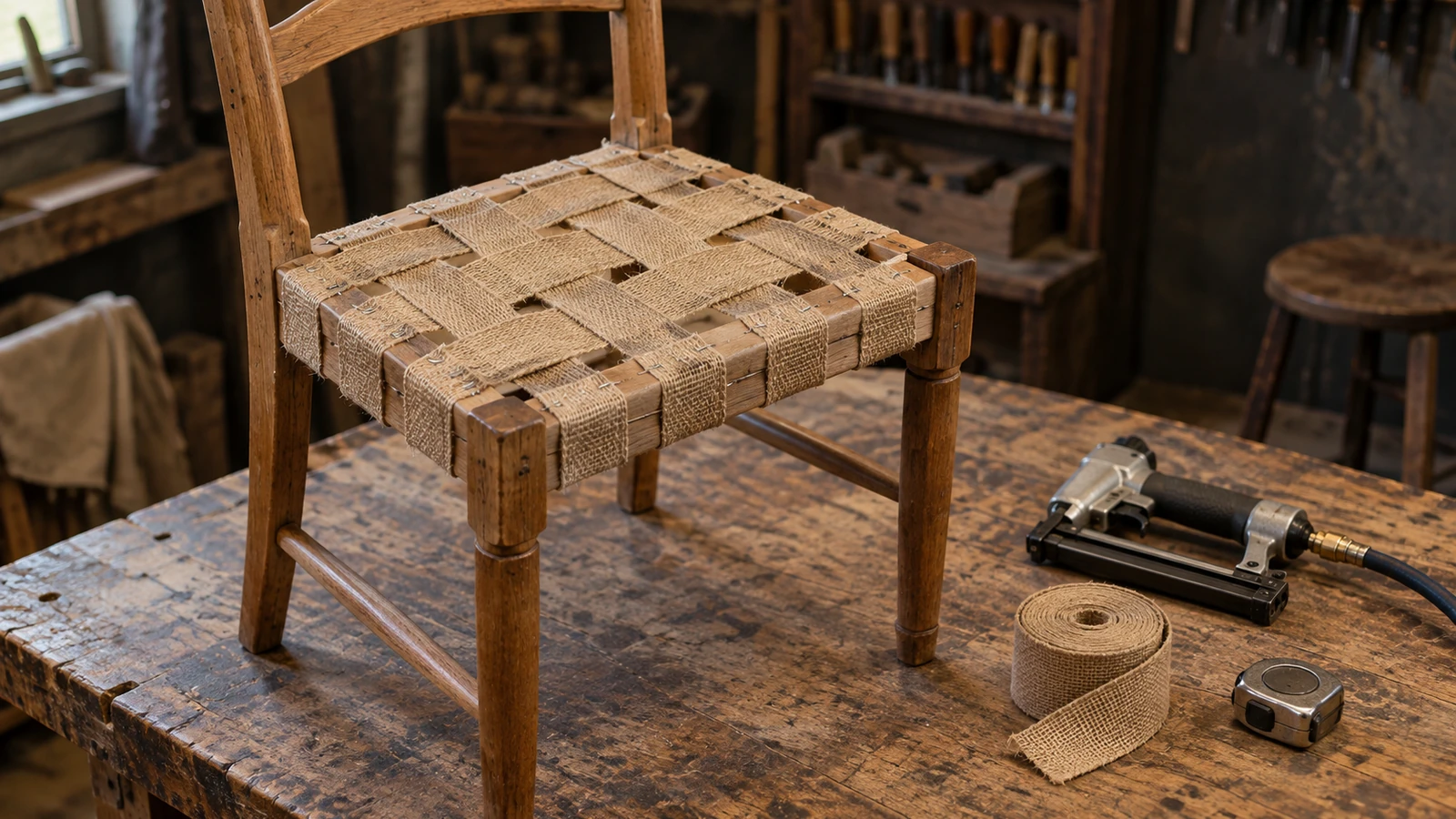

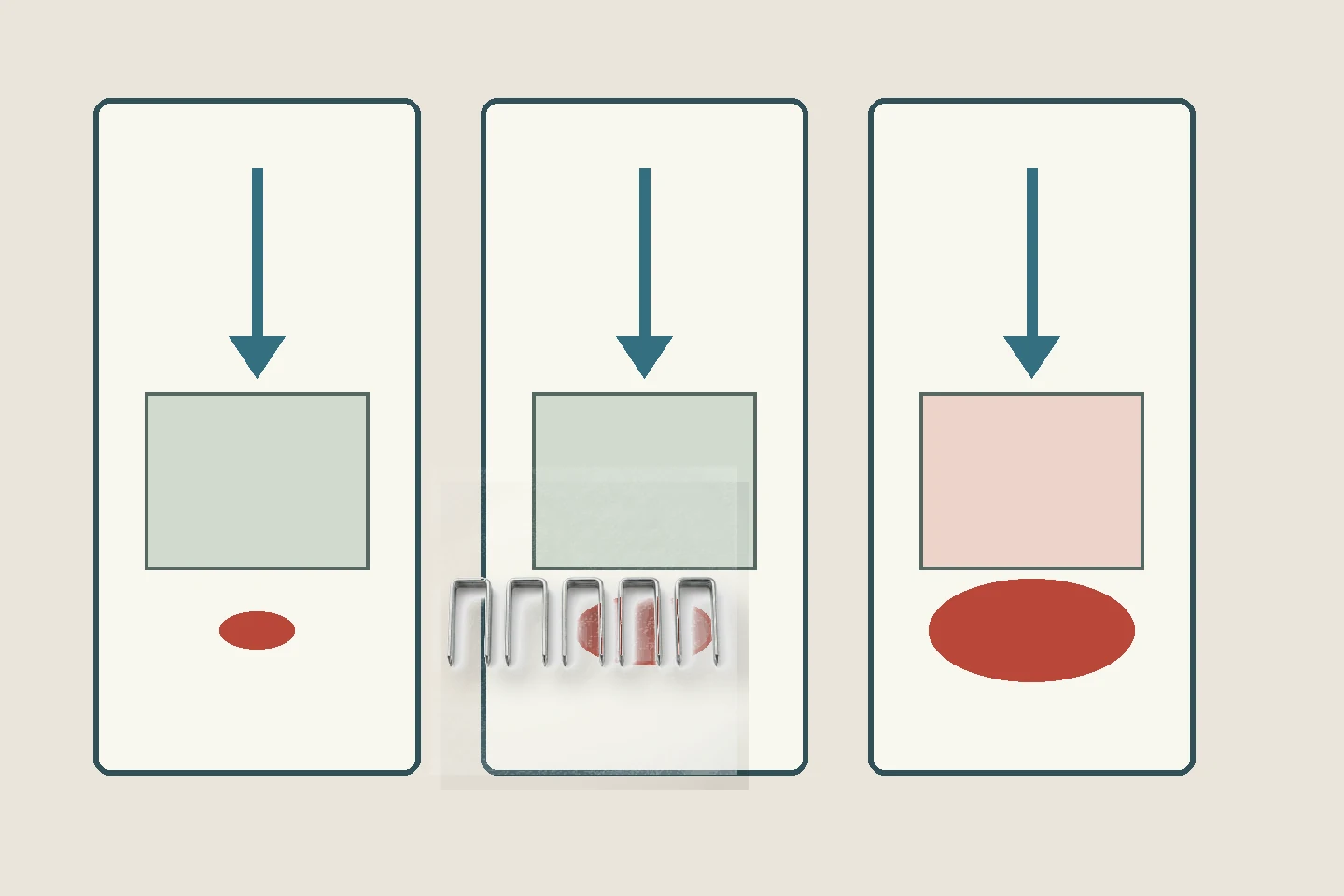
A pneumatic staple crown pull-through test should measure how a defined material stack fails around the crown under a controlled load, while keeping leg withdrawal, wire fracture, substrate tear, and tool damage as separate outcomes. The test is useful for comparisons only when the staple, tool, coupon, installation, conditioning, and loading method are all recorded.
ProAirNails recommends beginning with the real failure seen in production: fabric escaping, thin panel pull-through, crown cutting, surface indentation, or a joint that opens while the staple remains embedded.
Name the event before choosing the fixture
Pull-through means the top material moves past or tears around the crown. It is not identical to both legs withdrawing from the base, one leg straightening, the crown breaking, or the base splitting. Photograph each outcome and decide whether the measured endpoint is first visible damage, a defined displacement, peak load, or complete separation.
Build coupons from controlled material stacks
Record top-layer type, thickness, coating, fiber direction, edge distance, overlap, backing material, density, moisture or conditioning, and support span. Cut coupons consistently and identify their orientation. If production uses several suppliers or lots, treat them as deliberate comparison groups rather than pooling them silently.
| Variable | Keep or vary? | Reason |
|---|---|---|
| Staple series | Keep for baseline | Controls crown and wire geometry |
| Leg length | Keep unless studying engagement | Changes base anchorage |
| Top material | Vary by planned group | Controls local tear and bearing |
| Driver setting | Keep inside a recorded window | Changes initial crown indentation |
| Load direction | Keep by fixture | Changes how force reaches the crown |
Create an installation window before loading
Use the named stapler, magazine, driver, pressure or power setting, nose contact, operator method, and support. Record crown depth and reject curled legs, obvious overdrive, incomplete seating, edge splits, or damaged coupons before the mechanical test. If those are production-relevant failures, report them as installation yield rather than deleting them from the study.
Measure crown geometry and contact
Record nominal crown width, wire dimensions where required, leg length, point, finish, and strip identity. After driving, observe whether the crown sits flat, tilts, cuts a line, bridges a contour, or embeds unevenly. The same nominal width can create different contact when wire shape, tool nose, material texture, or seating depth changes.
Load the coupon in a defined direction
State fixture faces, grip distance, unsupported span, load direction, test rate, preload, stop rule, and data frequency. Avoid grips that damage the coupon before the staple carries load. Run empty or unfastened controls if fixture friction or material tearing could be mistaken for joint resistance.
- Zero the system before each group.
- Use identified coupons and staple lots.
- Record installation rejects separately.
- Photograph the failure without rearranging it.
- Retain representative high, middle, and low results.
Read the curve and the failed coupon together
The pneumatic staple crown pull-through test can report initial damage load, peak load, displacement at a defined point, and failure mode. A higher peak is not automatically better if it arrives after unacceptable surface damage or an unstable installation yield. Compare distributions and modes, not only group averages.
Use a decision matrix instead of one ranking
| Result | Interpretation question | Possible action |
|---|---|---|
| Early crown cut | Is contact too concentrated? | Review crown, wire, depth, and top layer |
| Leg withdrawal | Is base engagement limiting? | Review leg length, point, base, and spacing |
| Base split | Is the coupon or edge distance limiting? | Change geometry or installation window |
| Crown fracture | Is wire or driver damage involved? | Hold lot and inspect product and tool |
| Wide scatter | Which input is uncontrolled? | Stratify lots, operators, tools, and materials |
Condition samples to the intended comparison
Temperature, humidity, adhesives, coatings, fabric tension, wood or board condition, and time after installation can change the result. Define conditioning and test timing. Do not claim broad service-life performance from one room condition or a short laboratory exposure.
Connect product conformity to application evidence
The active ASTM F1667/F1667M page provides applicable driven-fastener requirements and terminology. It does not define this application-specific coupon or guarantee a material stack. The ISO 2859-1:2026 page can support a defined attribute-sampling plan for lots; it does not replace the controlled application study.
Release a combination, not a staple alone
Identify the approved staple, tool, settings, top material, base, coupon geometry, conditioning, fixture, endpoints, sample count, acceptance, and failure modes. ProAirNails can discuss pneumatic staples, the broader pneumatic fastener range, available product families, and trial details through the inquiry page.
Plan the RFQ around the comparison
Send staple series, crown, wire, leg, finish, tool, material layers, photographs, installation settings, observed failure, coupon drawing, conditioning, sample quantity, endpoint, and decision rule. Ask the supplier to identify confirmed fields and open assumptions. This keeps pneumatic staple crown pull-through test results tied to a reproducible assembly.
Keep conclusions inside the tested boundary
A coupon is not a complete sofa, cabinet, crate, panel, or package. The test cannot represent every direction, dynamic load, aging condition, misuse, or manufacturing variation. ProAirNails can support sample definition and traceability, while qualified buyer personnel own fixture safety, application approval, and final limits.
Use the pneumatic staple crown pull-through test to learn which part of the joint gives way first, then improve that boundary without hiding a different failure.
FAQ
What is crown pull-through?
It occurs when the top material passes, tears, or deforms around the staple crown under load.
Is pull-through the same as withdrawal?
No. Withdrawal is loss of leg anchorage from the base; both modes should be recorded separately.
What should remain constant in a comparison?
Keep the tool, staple baseline, installation window, coupon geometry, conditioning, fixture, load direction, and endpoint controlled.
Should installation rejects be discarded?
Record them as installation yield; exclude them from mechanical comparison only under a written rule.
Which endpoint is best?
Choose the endpoint connected to the application, such as first damage, defined displacement, peak load, or separation.
Why photograph every failure?
Similar force values can represent different modes that require different corrective actions.
Can an average alone release a joint?
No. Review scatter, minimum rules, failure modes, installation yield, and sample representativeness.
Does a wider crown always prevent pull-through?
No. Contact, wire, seating, material, tool fit, and leg anchorage also influence the result.
When should conditioning be included?
Include it when humidity, temperature, coating, adhesive, aging, or material state can affect the application.
What information should accompany samples?
Provide lot identity, dimensions, finish, tool, settings, material lots, coupon drawing, conditioning, and acceptance method.