
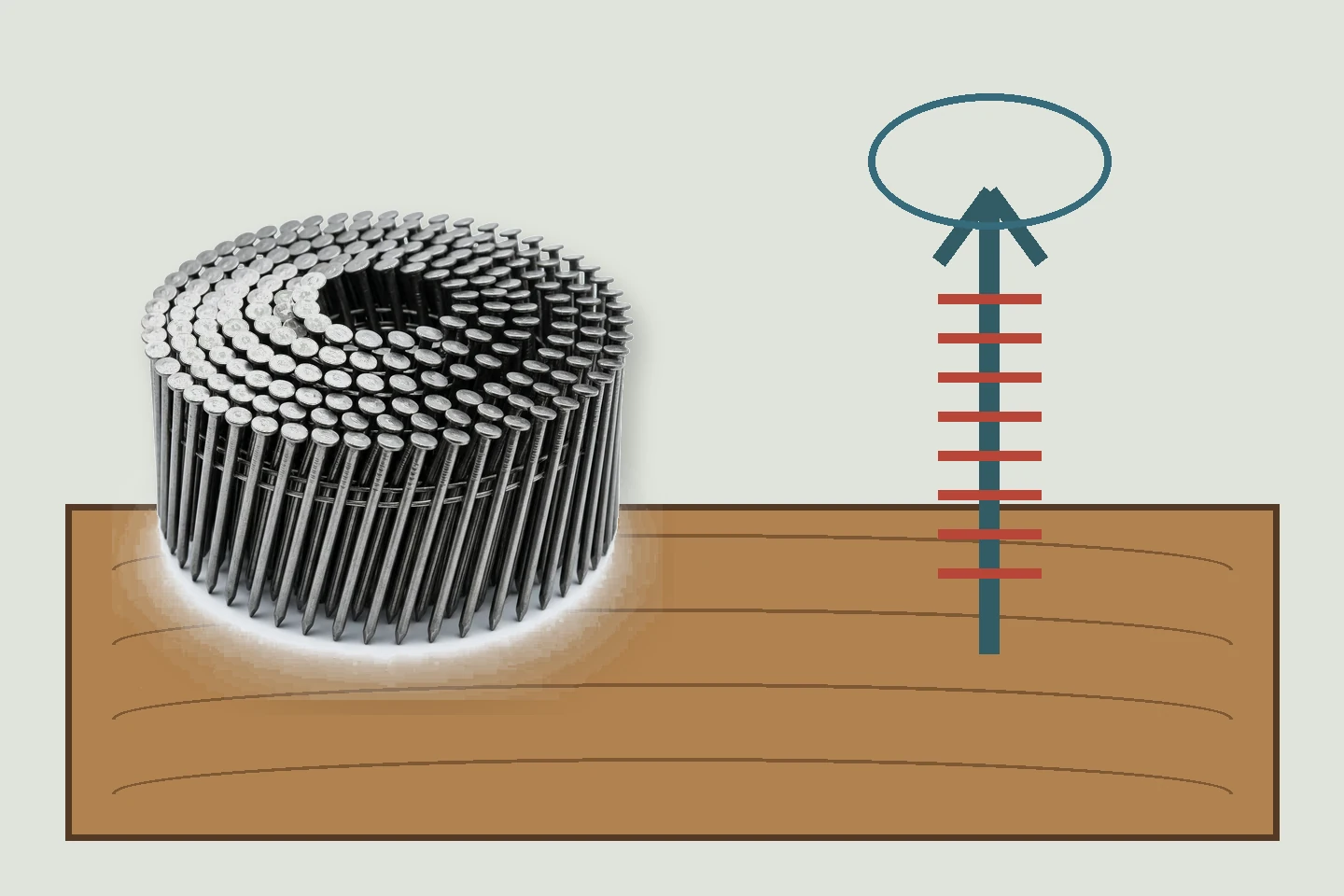
Ring shank coil nails are selected when a joint needs a defined withdrawal response, but the shank pattern alone does not guarantee holding performance. Wood species, density, moisture, grain, edge distance, penetration, head, point, coating, tool energy, and installation direction can change the result.
ProAirNails recommends testing the complete nail-tool-wood joint and preserving both the dimensional specification and the application evidence used for approval.
Trace the load before choosing the shank
Identify whether the joint is dominated by withdrawal, shear, combined loading, vibration, impact, handling, or cyclic moisture. Describe which member can move, how the load enters the joint, and what failure is unacceptable. A high withdrawal value is not useful if the board splits, the head pulls through, or the connection fails in another mode.
Build the joint map from eight inputs
| Input | Record | Why it changes the result |
|---|---|---|
| Wood | Species, grade, density, defects | Controls fiber response |
| Moisture | Condition at test and service | Changes dimensions and withdrawal |
| Geometry | Diameter, length, head, point, rings | Defines contact and penetration |
| Location | Edge, end, spacing, grain direction | Changes split and failure risk |
| Tool | Model, pressure, depth setting | Changes seating and damage |
| Collation | Angle, wire, weld, pitch | Controls feed and debris |
| Finish | Coating and surface condition | Affects friction and exposure |
| Acceptance | Failure mode and statistical rule | Turns data into a decision |
Specify the ring pattern as geometry
Record nominal shank diameter, ring outside diameter, root diameter, pitch, ring shape, ringed length, distance from point and head, and tolerances. Two nails sold under the same shank name can have different contact patterns. Ask how the factory measures the feature and how tool wear or rolling setup is controlled across the lot.
Use standards without skipping application proof
The active ASTM F1667/F1667M page covers driven fasteners, including material, physical-property, workmanship, coating, and dimensional content. It can support applicable terminology and requirements, but the buyer must still define the joint, nail dimensions, collation, tool, wood, test method, and acceptance criteria.
Compare against a meaningful control
Use a smooth, screw, or alternative ring pattern only when it represents a real sourcing decision. Keep diameter, length, head, point, coating, tool, penetration, wood, moisture, spacing, and test method aligned where possible. If several variables change together, the trial cannot show which one caused the difference.
Test withdrawal and observe every failure mode
Condition specimens, randomize nail locations, record actual dimensions and moisture, drive with the specified tool, and measure penetration. Define the loading direction, rate, fixture, sample count, and data treatment before testing. Report individual results and failure descriptions, not only an average that hides splits or head pull-through.
- Mark each nail and specimen position.
- Record knots, grain deviation, and edge distance.
- Keep seating depth within the approved window.
- Photograph splits, pull-through, bending, and fiber failure.
- Retain raw data and excluded-result reasons.
Read tool feed separately from holding data
A nail can produce acceptable withdrawal in a hand-prepared specimen and still fail commercial production through coil unwind, broken welds, protruding wire, magazine drag, doubles, or depth variation. Run a representative feed sequence and identify which coil, carton, and production lot supplied every failed event.
Match finish evidence to exposure
The official ISO 9227:2022 page describes salt-spray test procedures and also states limits on using them to rank materials or predict long-term corrosion resistance. Specify the service environment, coating, test condition, exposure time, evaluation point, and acceptance rule. Confirm any applicable building or project requirement separately.
Use a release matrix for the commercial lot
| Release gate | Evidence | Hold signal |
|---|---|---|
| Identity | Drawing, SKU, finish, lot, label | Mismatch or unreadable scope |
| Geometry | Dimensions and ring profile | Outside agreed limits |
| Collation | Angle, pitch, weld, coil condition | Loose, bent, mixed, or protruding wire |
| Tool feed | Named nailer and event log | Jams, doubles, unwind, depth drift |
| Application | Approved joint trial | Changed wood, penetration, or failure |
| Packaging | Support, moisture, count, pallet | Crush, rust, broken coils, mixed labels |
Price the joint, not the nail count
Compare unit price with coil changes, feed loss, tool cleaning, rejected wood, split parts, inspection, packaging damage, storage, replacement freight, and field complaints. The best value from ring shank coil nails comes from stable installed joints and predictable production, not from maximum rings or minimum carton cost.
Choose packaging around coil geometry
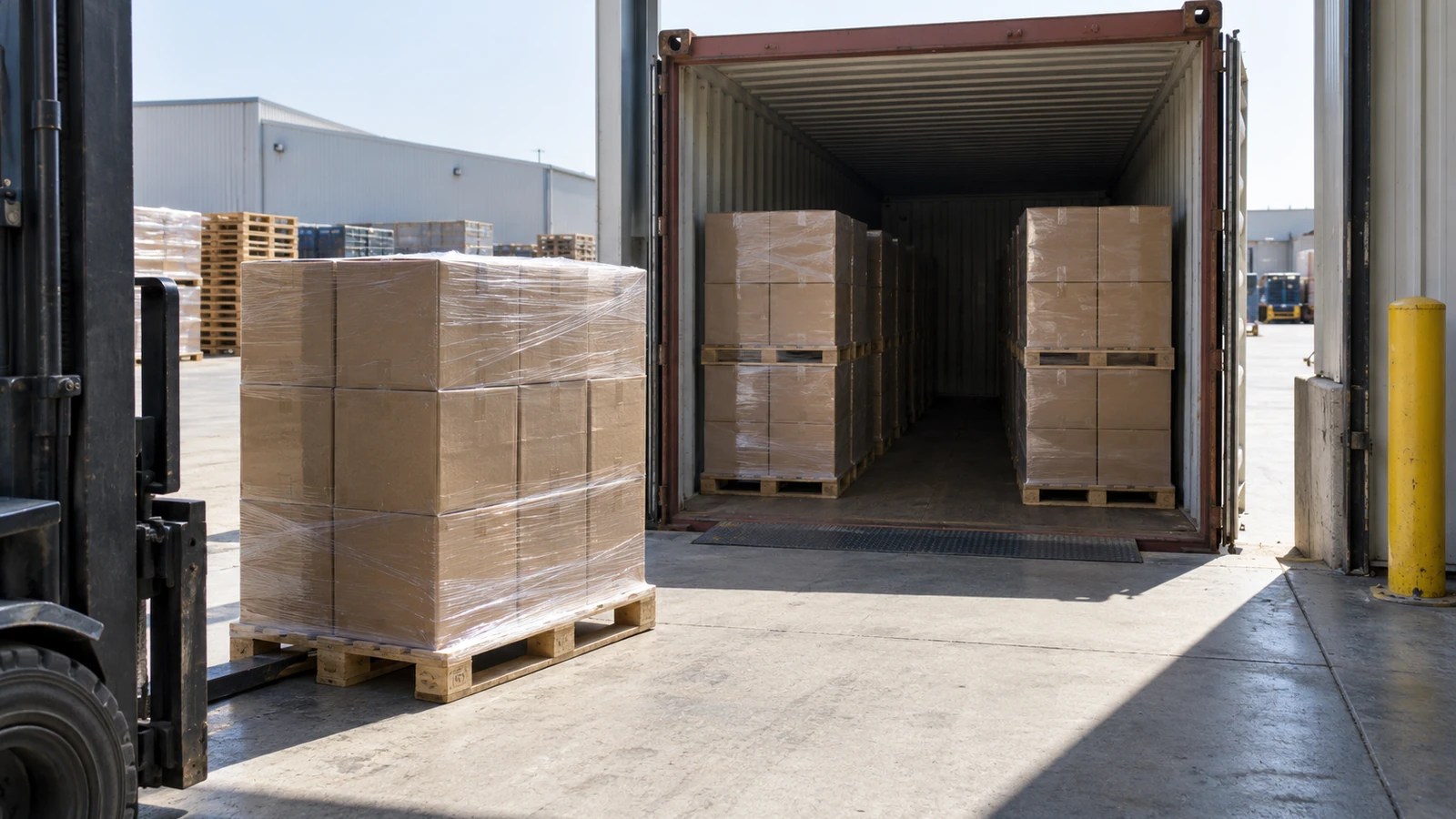
Specify coil diameter, nail count, inner support, separator, carton orientation, moisture barrier, label, carton strength, pallet pattern, and handling limits. Sample coils from pallet corners, center, top, and bottom after transit. A deformed coil can change both feeding and the apparent quality of the nail.
For commercial comparison, keep ring shank coil nails packaging, count basis, pallet quantity, and damaged-coil allowance visible beside the unit quote.
Write the RFQ around the tested joint
Send nail drawing, ring profile, collation, finish, wood and moisture range, tool models, pressure window, penetration, joint drawing, test method, sample count, acceptance, packaging, annual demand, destination, and change notice. ProAirNails can discuss coil nails, the wider pneumatic nail range, and related fastener families through the inquiry page.
Keep conclusions inside the tested boundary
One laboratory comparison does not establish structural capacity, code compliance, or durability for every species, moisture condition, spacing, exposure, or installation. The designer and buyer must determine applicable rules and safety factors. Ask for new evidence when wood, nail, coating, tool, or joint geometry changes.
Specify ring shank coil nails through the load path, then protect the decision with traceable geometry, representative testing, feed evidence, packaging, and controlled reorders. ProAirNails can help prepare the product and supply information for that review.
FAQ
Do more rings always mean more holding power?
No. Ring geometry, nail diameter, wood, moisture, penetration, spacing, and failure mode all affect the result.
Which ring dimensions should be specified?
Define shank, root and outside diameters, pitch, shape, ringed length, location, and tolerances.
Why record wood moisture?
Moisture changes wood dimensions and fiber behavior, making results difficult to compare when it is uncontrolled.
Should averages be reported alone?
No. Keep individual results, variation, specimen details, exclusions, and observed failure modes.
Can withdrawal data prove shear capacity?
No. Different load directions and failure modes require appropriate joint tests and engineering evaluation.
Why run a separate feed trial?
Withdrawal specimens do not expose coil unwind, weld breakage, magazine drag, doubles, jams, or production depth drift.
How should coating be selected?
Match it to the service environment, project requirements, substrate, test basis, and compatibility limitations.
What should the carton label include?
Record SKU, dimensions, ring profile, finish, collation, count, lot, revision, carton, and pallet identity.
When is retesting required?
Reopen evidence after material, geometry, ring, coating, collation, tool, wood, or joint changes.
What belongs in a supplier inquiry?
Send the drawing, joint, wood, tool, test, acceptance, pack, demand, destination, documents, and change controls.