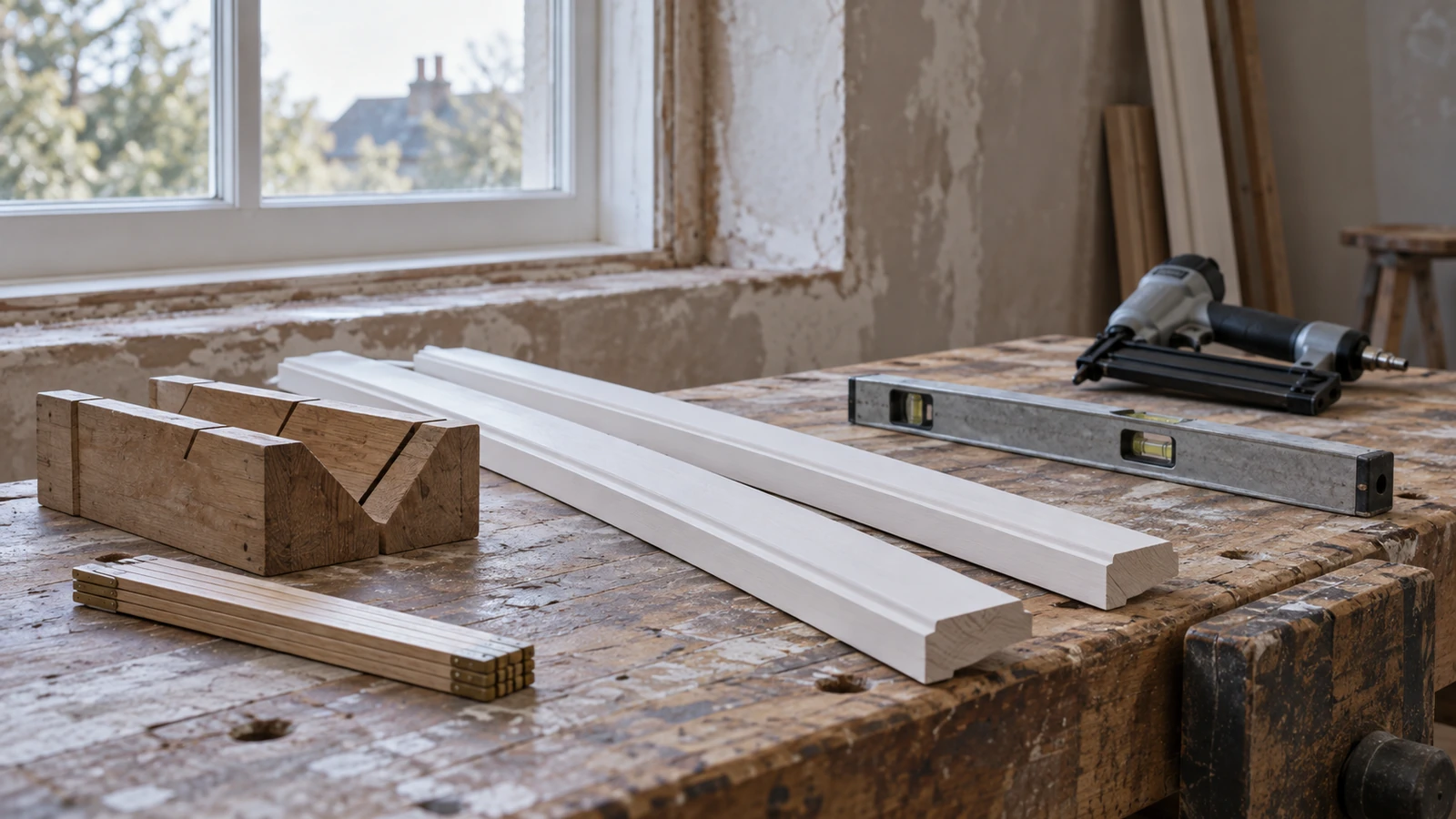

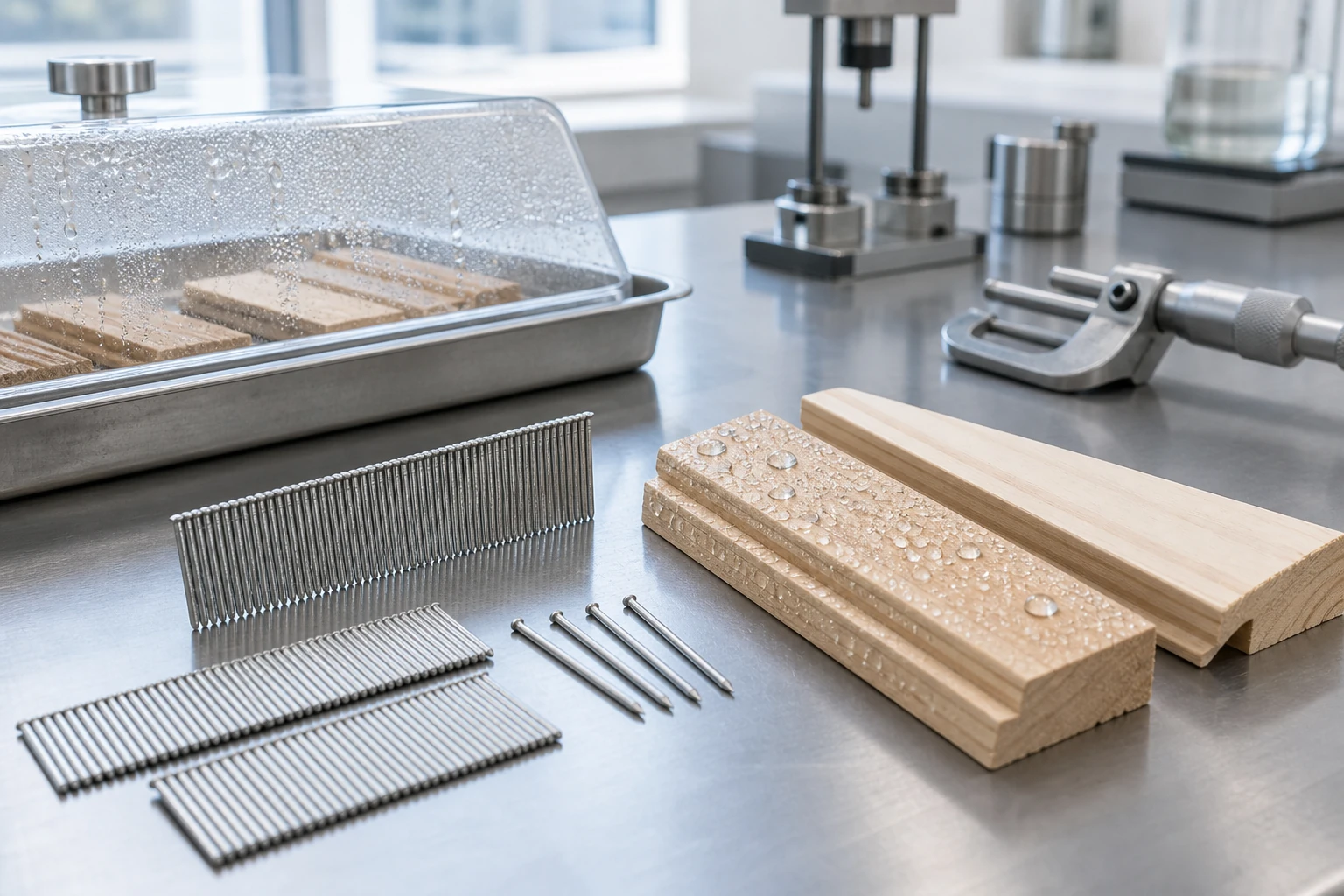
Stainless steel brad nails are a material choice for trim and light fastening where moisture, staining, finish appearance, or service environment creates a corrosion concern. They should not be selected from the word “exterior” alone. The buyer still has to define exposure, stainless grade, substrate, head visibility, tool compatibility, and the evidence required from an installed sample.
ProAirNails recommends starting at the water line: identify how moisture can reach the fastener, how long it can remain, and what consequence a stain or loss of section would create. That exposure map gives purchasing, production, and quality teams a shared basis for comparing a stainless option with coated carbon-steel alternatives.
Draw the exposure map before naming a metal
Separate dry interior trim, intermittently damp areas, condensation zones, sheltered exterior details, direct weather, salt-bearing air, and contact with wet or preservative-treated materials. Record cleaning chemicals and drying opportunities. Two applications in the same building can place very different demands on a small driven fastener.
Where stainless steel brad nails may earn their cost
The strongest case exists when corrosion would become visible through a pale finish, when replacement access is difficult, or when exposure persists beyond what the approved coating system can support. The weakest case is a vague request for “better quality” without a defined environment. Material cost should purchase a verified risk reduction, not an undefined premium label.
Specify the whole brad, not only the alloy family
| RFQ field | What to declare | Why buyers need it |
|---|---|---|
| Material | Requested stainless designation or approved evidence | “Stainless” covers more than one composition and behavior |
| Geometry | Gauge, length, head, point, shank profile | Controls tool fit and installed appearance |
| Collation | Strip format, angle, adhesive, count | Affects magazine loading and feed |
| Surface | Cleanliness, passivation or other declared treatment | Supports appearance and corrosion review |
| Application | Substrate, finish system, exposure, service location | Connects the specification to actual risk |
Check tool fit before testing corrosion
Load the proposed strip into the exact nailer and confirm magazine fit, driver alignment, feed rhythm, head seating, and safe ejection of collation material. Stainless material does not correct a wrong angle, length, gauge, or strip format. Follow the tool manufacturer’s instructions and isolate the tool before clearing any feed fault.
- Record nailer model and magazine designation.
- Confirm strip dimensions before firing.
- Use representative trim and backing.
- Inspect shallow, accepted, and deep seats.
- Retain the driven coupon and unused strip together.
Build a finish-facing sample panel
Drive brads into the intended wood, MDF, composite, or wrapped trim using the production tool. Apply the real filler, primer, topcoat, and cure schedule where the head will be hidden. Inspect for proud heads, splitting, discoloration, filler interaction, sheen change, and any mark after conditioning. A bare-metal cabinet test does not answer the complete decorative-system question.
Compare options on consequence, not one laboratory number
| Evidence pattern | Decision meaning | Next action |
|---|---|---|
| Dry interior, no stain in approved finish panel | Lower exposure may permit more than one option | Compare tool fit, appearance, supply, and cost |
| Condensation reaches hidden brad locations | Wet duration becomes a material-selection input | Run representative conditioning and inspect edges |
| Salt spray result is available without application panel | Relative lab evidence only | Request grade identity and installed-system evidence |
| Stain appears around filled holes | Decorative failure has occurred | Separate metal, moisture, residue, and coating causes |
| Stainless sample feeds poorly | Material label cannot override incompatibility | Correct geometry or tool pairing before approval |
Use corrosion testing without turning hours into years
The official ISO 9227:2022 page describes salt spray methods for assessing corrosion behavior in artificial atmospheres. It does not provide a universal conversion from chamber hours to outdoor service life, nor does it choose the correct stainless grade for a trim assembly. Report conditions and acceptance exactly.
Keep the driven-fastener standard in scope
The active ASTM F1667/F1667M-21a page covers nails, staples, materials, physical properties, dimensions, coatings, and finishes within its stated scope. It does not approve a project’s moisture exposure, decorative coating system, tool, or service-life claim.
Price the avoided failure and the control burden
Compare unit price together with touch-up labor, stain risk, replacement access, minimum order quantity, grade documentation, packaging, lead time, and the cost of keeping lots separated. Stainless steel brad nails can justify a premium where a visible callback is likely, but that premium can be wasteful where exposure is absent and the approved baseline already performs.
Control identity from sample to installation
Use item codes that distinguish material, dimensions, collation, and finish. Keep carton labels, certificates or declarations requested by the contract, incoming checks, and retained samples linked to the purchase order. Prevent stainless and coated carbon-steel strips from sharing an unlabeled bin at the point of use.
Send ProAirNails an exposure-ready RFQ
Provide exposure category, substrate, trim finish, gauge, length, head, point, collation, nailer model, annual quantity, packaging, destination, requested material evidence, test method, and acceptance panel. ProAirNails can discuss brad nails, related pneumatic nails, the wider product range, and samples through the inquiry page.
State the limits before approving stainless steel brad nails
A passing sample does not prove every stainless grade, chemical, climate, wood species, coating, installer, or service interval. Stainless can still stain, gall, deform, or participate in material interactions under unsuitable conditions. ProAirNails can support identified product evidence, but the buyer controls environmental classification, joint design, compliance, and final release.
Retain the approved strip, installed panel, exposure basis, and purchase specification. Revalidate stainless steel brad nails after a change to material designation, geometry, tool, substrate, finish system, exposure, supplier process, or packaging.
FAQ
Are stainless brads required for every exterior trim job?
No. Define direct weather, shelter, wet duration, salt, chemicals, substrate, finish, and project requirements before choosing material.
Does stainless mean the fastener cannot corrode?
No. Performance depends on grade, environment, contamination, design, and maintenance; corrosion resistance is not absolute immunity.
Can salt spray hours predict years outdoors?
No. Salt spray is controlled comparative evidence and should not be converted into universal field life.
Why test the filler and paint system?
The final customer sees the repaired finish, so staining, porosity, cure, and sheen matter alongside the fastener.
Will a stainless brad fit the same nailer?
Only when gauge, length, head, collation, angle, and strip dimensions match the tool’s requirements.
What should a material document identify?
It should identify the supplied item and the material evidence agreed in the purchase specification without vague family labels.
How should mixed fastener materials be controlled?
Use distinct item codes, labels, locations, retained samples, and point-of-use verification.
Is unit price the right comparison?
Include touch-up, callback risk, access, lead time, evidence, packaging, and inventory control in the commercial decision.
What sample should be approved?
Approve an unused strip plus a driven, filled, coated, and conditioned panel made with representative materials and tools.
Which changes reopen approval?
Review changes to grade, geometry, collation, tool, substrate, coating system, exposure, process, or packaging.