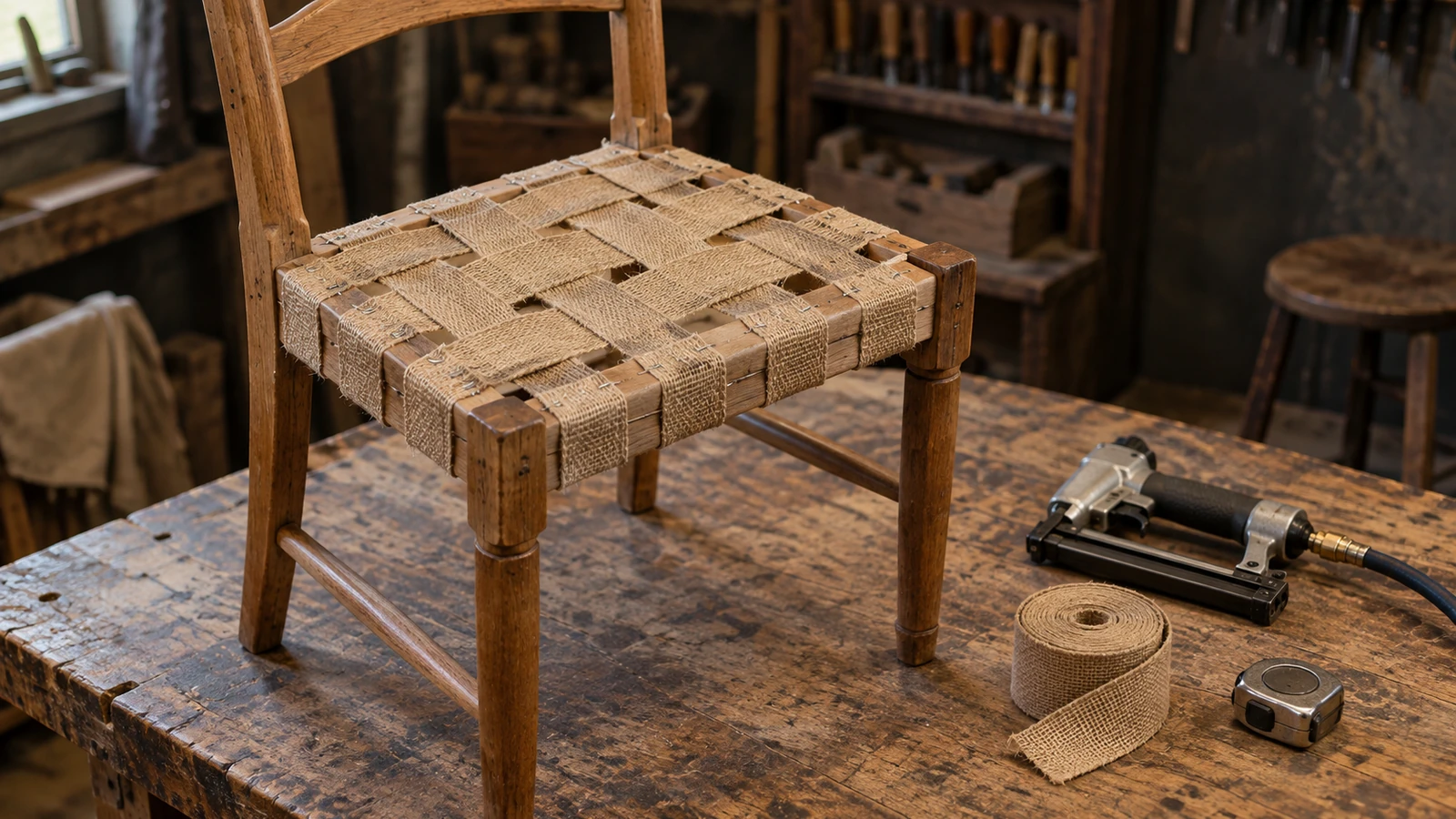

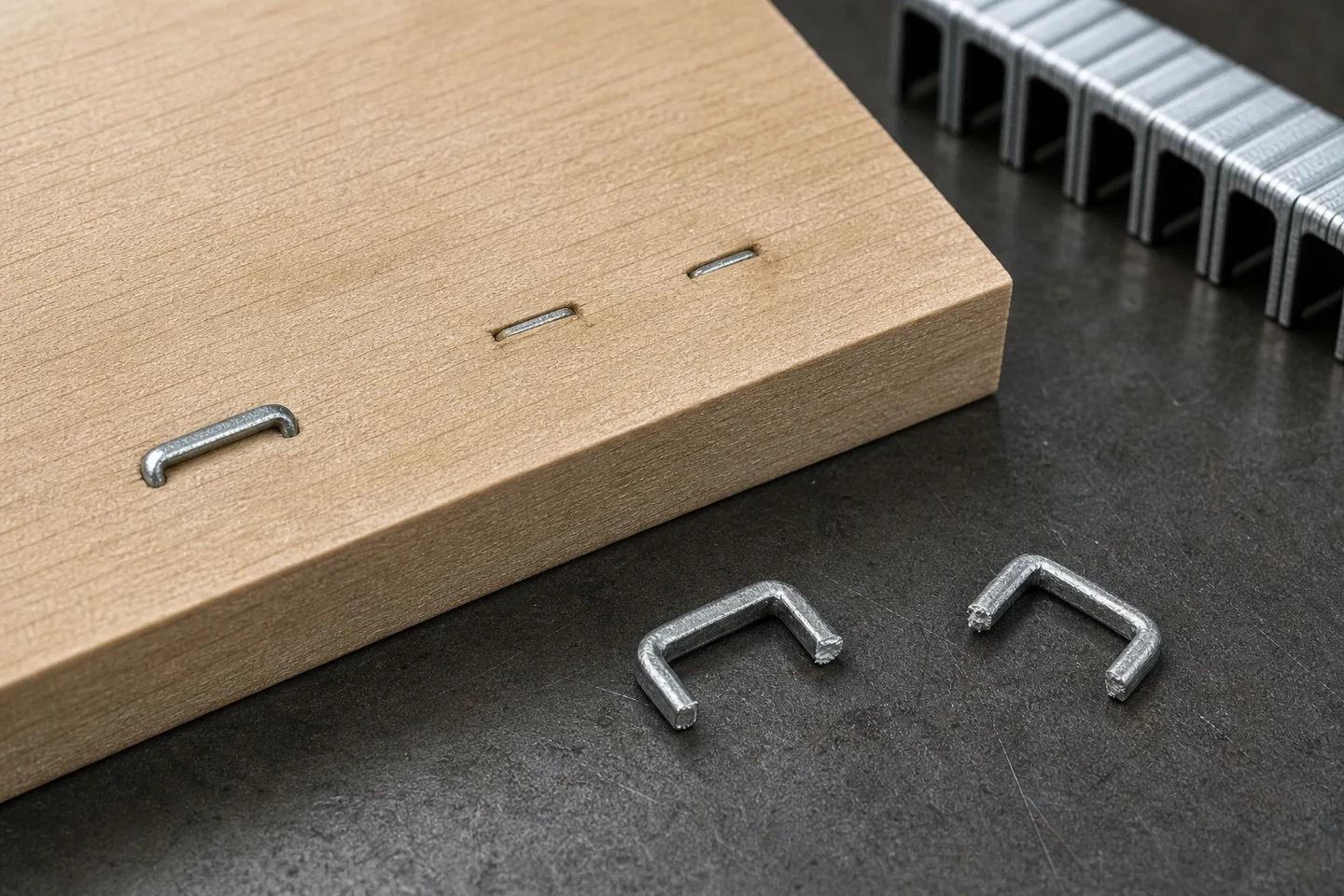
When a staple crown breaks during driving, recover every visible piece before clearing the tool or work area. The crown can be damaged before loading, distorted in the magazine, cut or struck unevenly in the feed path, overloaded against hard material, or fractured as the legs follow different resistance paths.
Isolate the tool according to its instructions after an abnormal sound, jam, fragment release, or unsafe event. Do not fire again to test whether the condition clears.
Arrange the fragments into one evidence set
Photograph fragments where found, then place them beside an intact staple from the same strip without forcing the pieces together. Record which surfaces appear freshly fractured, rubbed, flattened, cut, or corroded. Keep the workpiece, strip, carton, and tool identity connected.
Search the approved collection area for missing wire pieces because a partial set can create a false reconstruction.
Count the expected crown and leg sections against the intact control. Record any piece that remains embedded, inside the tool, attached to collation, or missing. Fragment location helps reconstruct whether separation occurred before entry, at driver contact, or inside the workpiece.
Locate the first damaged section
| Damage location | Possible direction | Next inspection |
|---|---|---|
| Center of crown | Incoming weakness, crown impact, bending load | Driver contact and unused staples |
| Crown-to-leg bend | Leg resistance difference, geometry transition | Material path and strip condition |
| Flattened or sheared face | Feed or driver interference | Nose, driver, magazine, alignment |
| Multiple rubbed surfaces | Fragment movement after break | Event timing and recovery location |
Preserve the workpiece entry pattern
Mark both intended leg positions, crown orientation, tool direction, material grain, edges, joints, and support. Inspect whether both legs entered, one leg remained at the surface, or the staple met a hard insert, knot, fastener, or gap.
Do not pull embedded leg pieces before photographing their depth and angle. Unequal leg paths can load the crown asymmetrically.
Inspect the strip from carton to nose
Check packaging crush, strip straightness, adhesive or collation condition, staple spacing, loose pieces, magazine loading, follower pressure, feed alignment, driver condition, nose debris, and tool compatibility. Compare unused staples around the suspect position without bending the strip.
A damaged driver or nose may leave repeated marks on otherwise intact crowns. Preserve that pattern across the sample.
Inspect unused crown bends under consistent lighting for flattening, nicks, sharp tool marks, coating cracks, or irregular spacing. Separate visible handling damage from the fresh fracture surface; they may be related, but one does not automatically prove where the break began.
Run a limited controlled comparison
After qualified tool inspection, use representative supported material and the approved tool settings. Compare a confirmed strip in the original tool and the suspect strip in a confirmed compatible tool where permitted. Record every drive position and stop at the first fragment, jam, deformation, or abnormal sound.
Changing pressure, tool, strip, material, and operator together may remove the symptom without identifying the source.
Contain based on recurrence and fragment risk
Hold affected strips or tools when crown fractures repeat, unused staples show cracks or deformation, feed components are damaged, or sharp fragments cannot be accounted for. Define inspection and disposition for the workpieces already fastened.
The limitation is important: fragment reconstruction does not prove material conformity, tool safety, defect rate, or joint performance. Those conclusions require qualified examination and the applicable service, product, and sampling criteria.
Review the Air Staple Pin category and the wider pneumatic fastener range. Send staple and tool references, strip and carton condition, fragment photographs, workpiece evidence, and event sequence through the inquiry page when a staple crown breaks during driving.
FAQ
Can one broken staple crown be ignored?
A single event does not establish lot condition, but fragments, tool condition, workpiece acceptance, and recurrence should be evaluated under the quality and safety procedure.
Does harder wood cause staple crowns to break?
Hard features can increase resistance, but strip damage, tool fit, driver contact, feed alignment, staple geometry, support, and entry angle also matter.
Should the tool be fired again after a crown breaks?
Follow the manufacturer's isolation and inspection instructions. Another cycle through a blocked or damaged path can create additional fragments or damage.
A complete reconstruction makes staple crown breaks during driving a controlled failure investigation rather than an unexplained loose fragment.