
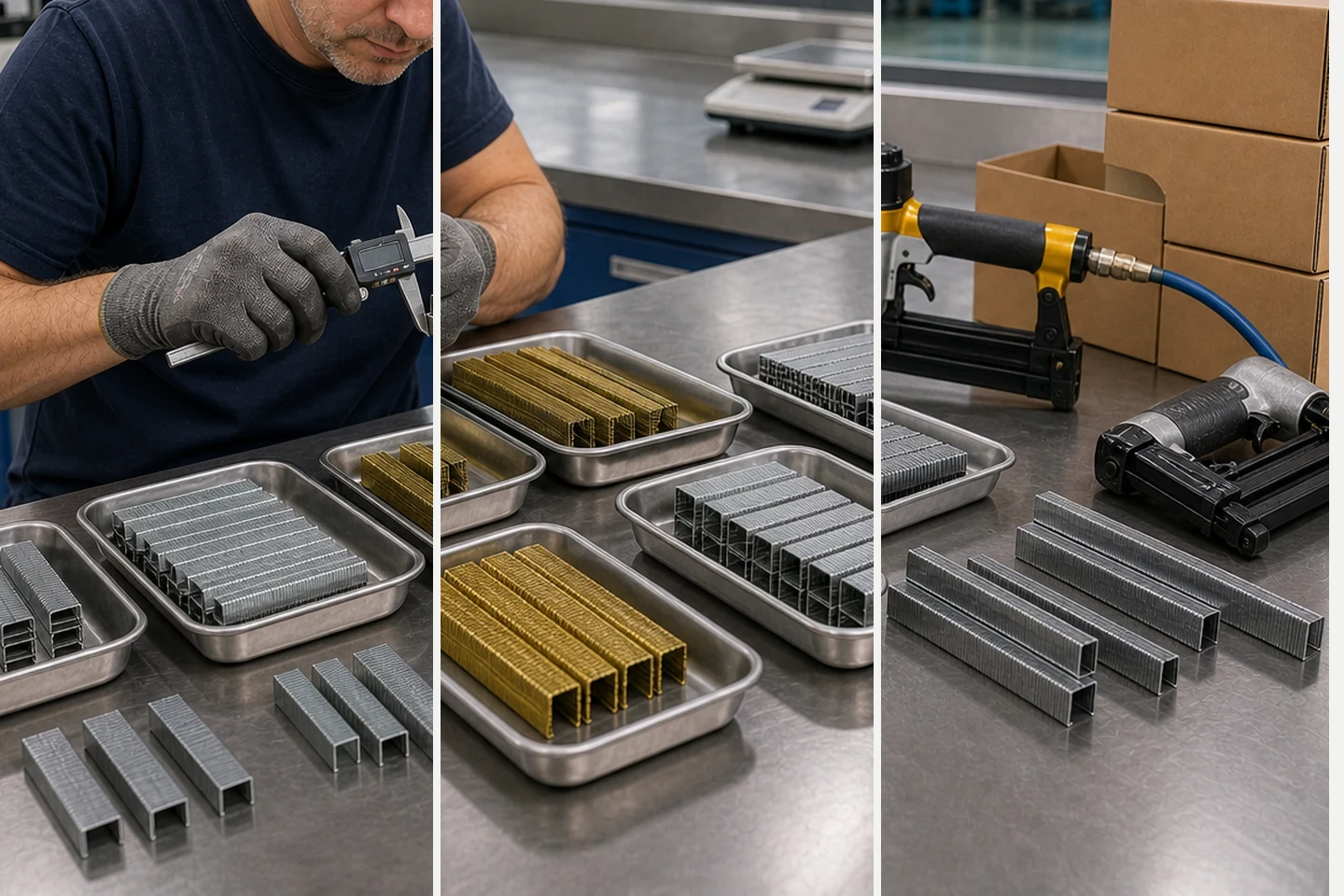
Crown width and leg length solve different parts of a fastening problem. The crown controls how the load is spread across the top material and how visible the fastening line will be. The legs determine how far the staple can pass through the top layer and enter the receiving material. Neither dimension can be chosen without the tool series.
That is the central answer to staple crown width vs leg length: choose the crown for surface behavior and application style, then choose the leg length for the material stack and required engagement, while staying inside the stapler's approved fastener range.
Read the two dimensions as a matrix
| Selection question | Crown width mainly changes | Leg length mainly changes |
|---|---|---|
| Will the top material pull through? | A wider bearing area may spread force over more surface | Extra length does not automatically prevent crown pull-through |
| Will the fixing line be visible? | A narrow crown is usually less visually dominant | Length is mostly hidden after driving |
| Can the staple reach useful substrate? | Crown does not add penetration | Length must account for the full top-material stack |
| Is edge splitting or breakout a concern? | Crown form changes the footprint at the surface | Longer legs may increase interaction with thin or hard receiving material |
| Will it load and feed? | Crown and wire format must match the magazine and driver | Length must remain within the tool's rated range |
Four applications produce four different decisions
Upholstery and fabric attachment
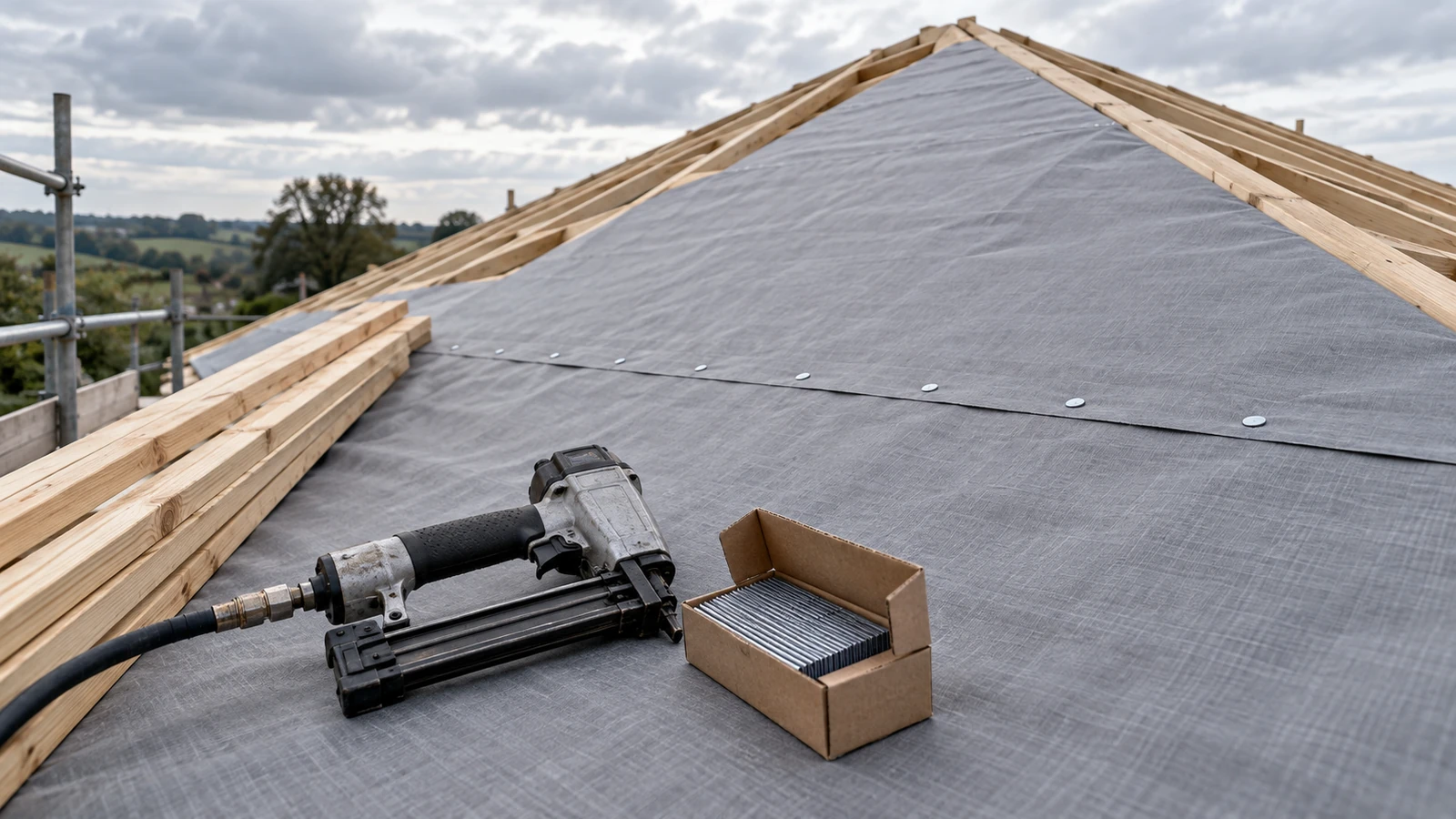
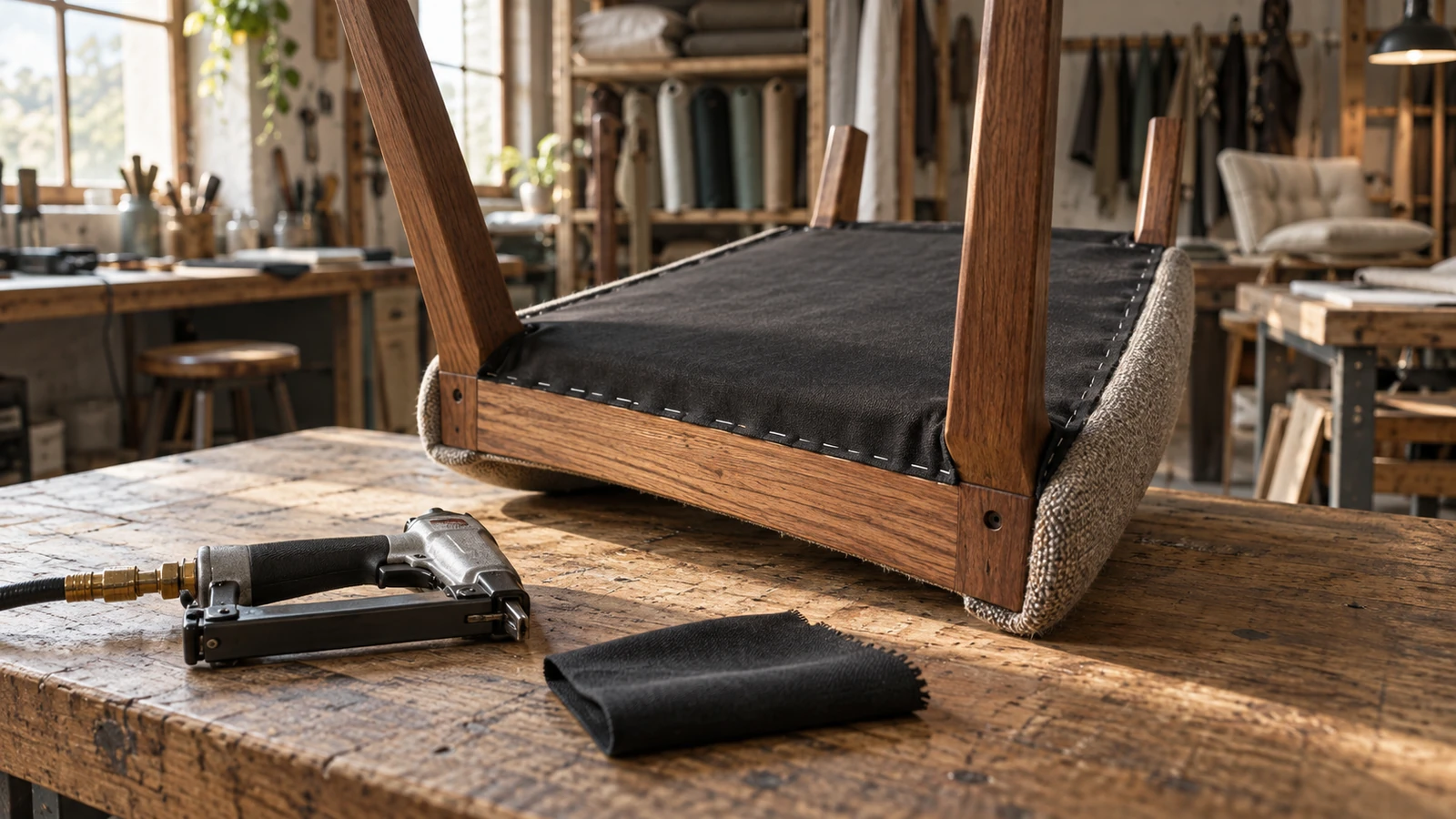
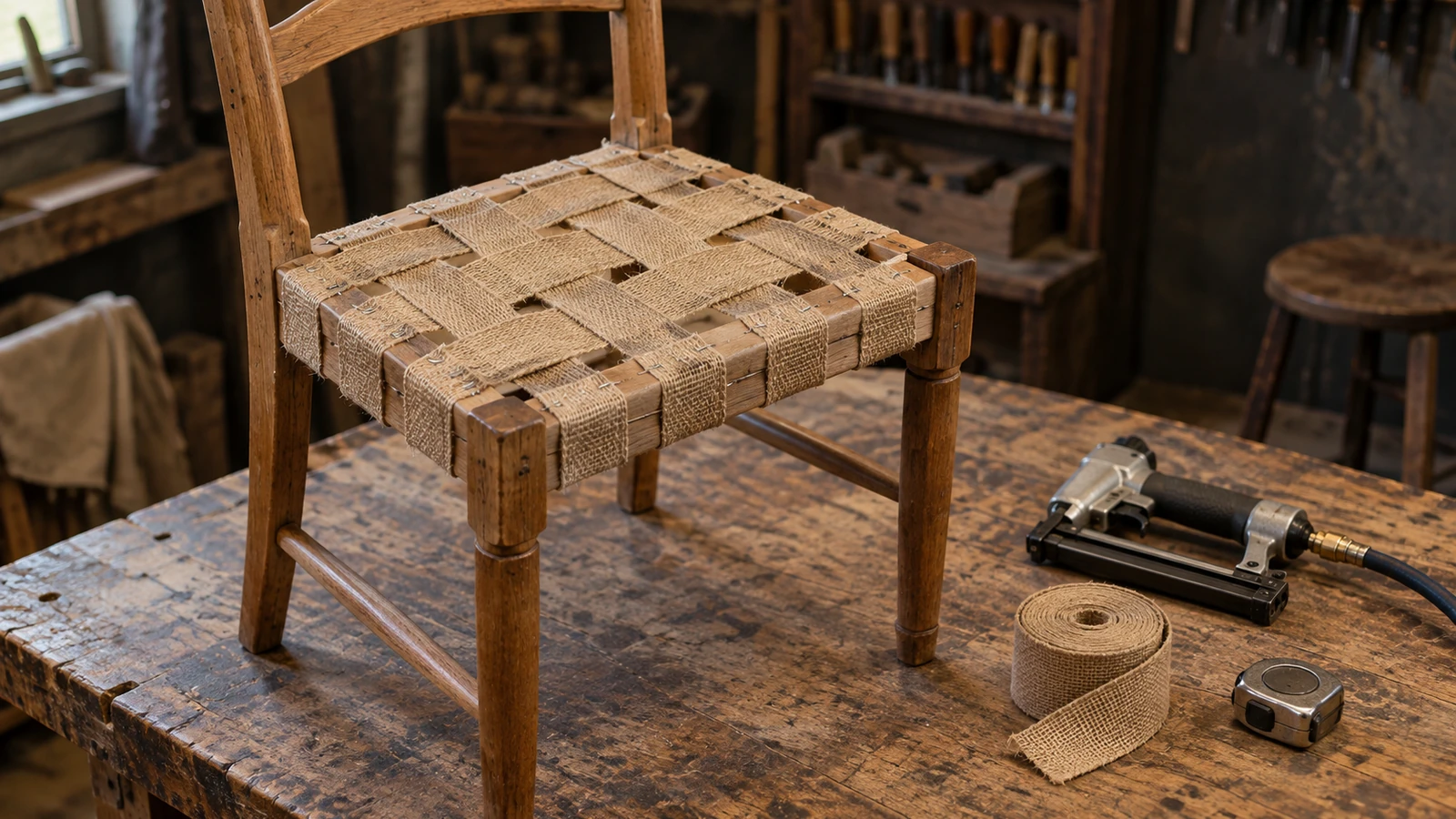
The top material is flexible and can tear or pull around a small bearing point. Crown footprint, wire size, surface marking, and the receiving frame all matter. A longer leg may improve entry into the frame, but it cannot compensate for a crown that damages or cuts the covering. Test on the real fabric stack, including any foam or backing.
Cabinet backs and thin sheet materials
Here the fastener often works close to an edge and the finished panel may remain visible. A clean surface result and enough substrate engagement are both important. Inspect the reverse side for breakthrough and the face for crushing. Panel density can vary, so a setting proven on one sheet may not transfer unchanged to another.
Carton and packaging work
Packaging applications can use crown styles designed around corrugated material, closing patterns, or industrial staplers. The board grade, number of layers, joint geometry, and closing equipment shape the choice. Do not select a staple only because its leg length appears sufficient on paper.
Light wood assembly
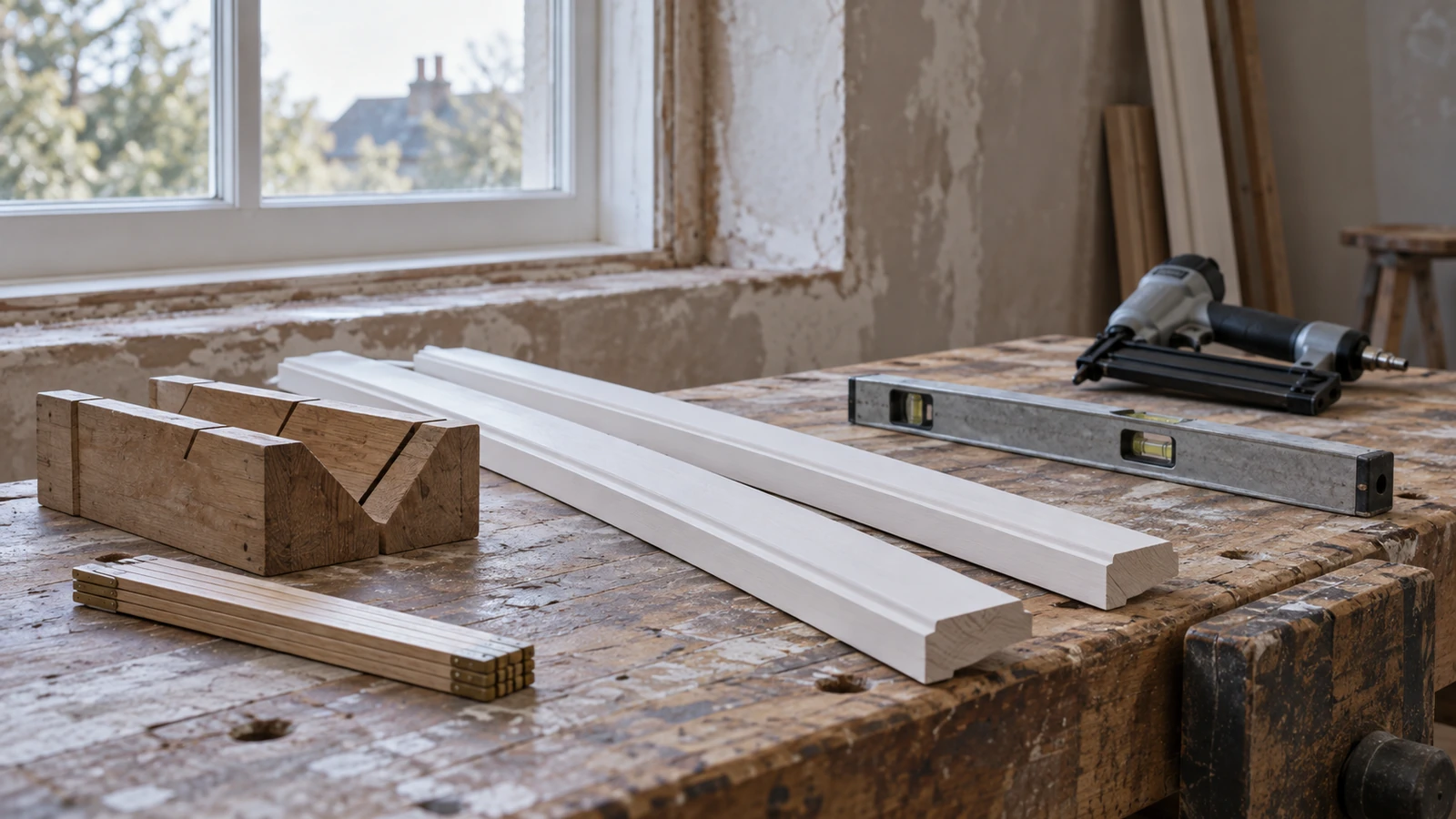
For wood components, the staple must enter the receiving member without excessive surface damage, edge breakout, or hidden leg deflection. Grain direction, species, moisture condition, joint position, and pneumatic setting can all change the result. A narrower crown may suit a less visible line, while a wider crown may be chosen where bearing area is more important.
Do not infer compatibility from a familiar series name
Series names are useful only when both sides mean the same geometry. Confirm crown, wire width and thickness, leg length, collation angle or strip form where relevant, finish, point, and the exact stapler model. Two strips that look similar on a product page may not share magazine fit or driver-blade clearance.
Review the Air Staple Pin category and the wider pneumatic fastener range, then compare the candidate product with the tool manual. OSHA also provides general pneumatic-tool safety guidance; tool-specific instructions and workplace rules still control the job.
Build a one-page sample card
For each candidate staple, record the strip reference, crown, leg, wire, finish, stapler, material stack, air setting used by the test team, and visible result. Add photographs of the face, edge, and reverse side. Run enough positions to include an edge, a field location, and the hardest material expected.
The sample card should also state what the test does not prove. A bench sample does not establish long-term joint performance, code compliance, corrosion life, or suitability for every material batch. Those questions require the appropriate engineering, project, and environmental review.
Choose the dimension that answers the actual failure
If the top layer pulls through, reconsider crown footprint and surface support. If the staple does not reach the receiving member, reconsider the material stack and leg length. If feeding fails, return to tool compatibility rather than increasing either dimension.
In short, staple crown width vs leg length is a two-variable decision inside a larger tool-and-material system.
Send ProAirNails the current strip, stapler model, material layers, photographs, and observed failure through the inquiry page. This turns a broad staple crown width vs leg length question into a product comparison that can be sampled.
FAQ
Does a wider staple crown always hold better?
No. A wider crown can spread load over more surface, but joint behavior also depends on wire, leg engagement, material, edge distance, driving result, and application. “Better” needs a defined failure mode.
How should staple leg length be chosen?
Start with the complete top-material thickness, the receiving material, reverse-side clearance, edge risk, and the tool's approved range. Then verify the result in representative samples.
Can crown width and leg length be changed independently?
Only within staple formats supported by the intended tool and product series. Changing crown often means changing the staple family or stapler, so confirm the whole system before ordering.