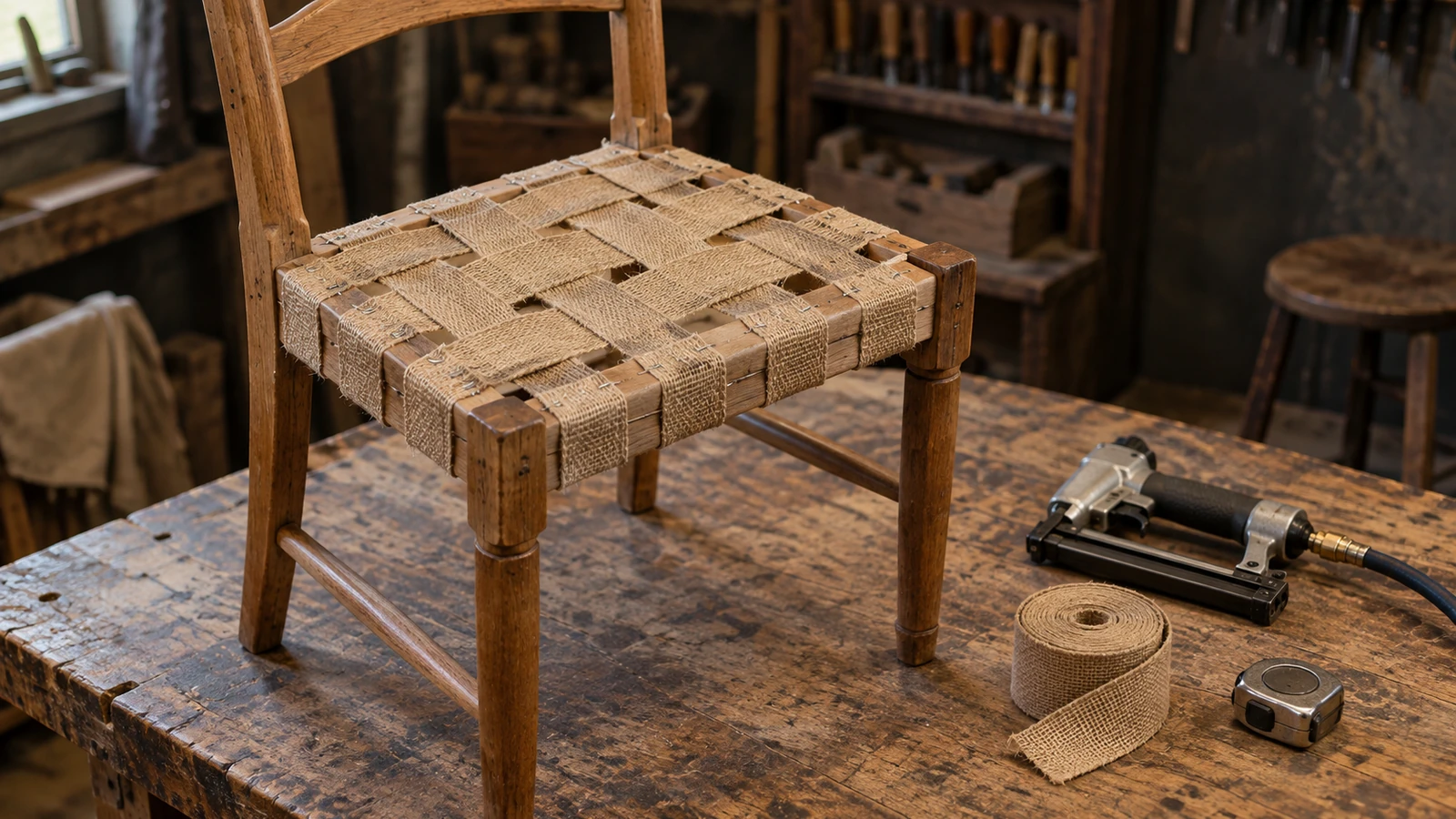

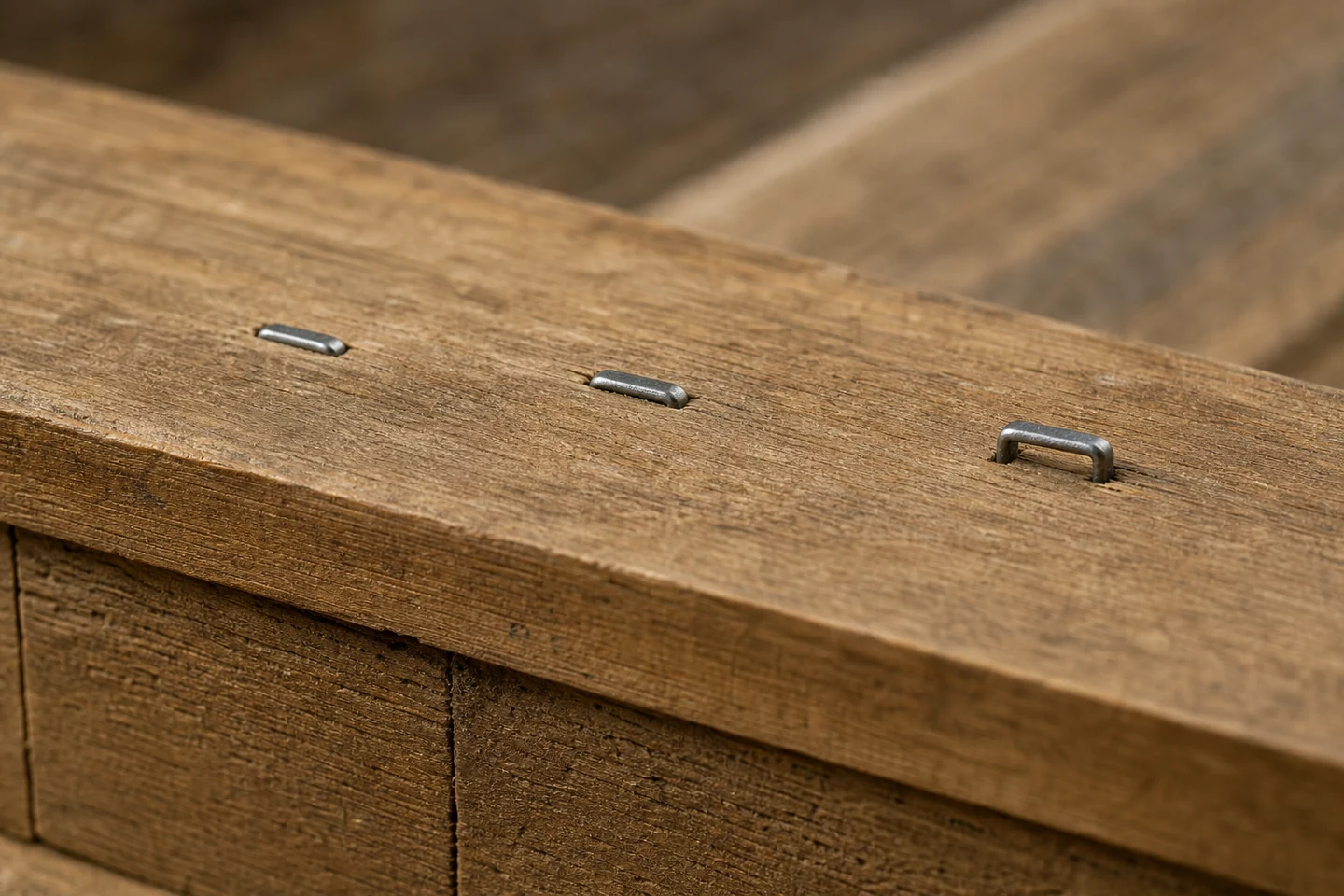
Staples backing out of wood should be tracked from installation through service, because a raised crown can appear by more than one route. The staple may rebound immediately, withdraw gradually under cycling, move with a separating joint, lose support as wood changes, or reveal hidden leg deflection and damaged material.
Photograph the condition before hammering or resetting the crown. Mark the location, crown orientation, load direction, nearby joints, and time first noticed.
Establish the installed baseline
On a representative sample, measure crown height immediately after driving and after the material has recovered from local compression. Record staple series, leg length, crown, wire, point, tool, pressure, depth setting, wood, moisture condition, support, and joint stack.
Include accepted variation. A perfectly flush photograph without measured tolerance cannot show whether later movement is meaningful.
Inspect at fixed time and cycle points
Check the same marked positions after conditioning, handling, transport simulation, assembly loading, and defined service cycles where applicable. Measure crown height relative to the same local reference and photograph from the same side-light direction.
- Immediate: identifies seating and rebound.
- Early interval: identifies joint settling or material recovery.
- Cycle checkpoints: show progressive movement.
- Final or stop point: records the acceptance boundary.
Classify the return path
| Pattern | Possible mechanism | Evidence to inspect |
|---|---|---|
| Crown rises immediately | Rebound, incomplete seating, hard feature | Drive event, support, crown and leg path |
| Crown rises gradually | Repeated withdrawal, material movement | Cycle count, environment, joint load |
| One side rises first | One leg deflects or loses engagement | Cross-section and grain direction |
| Several staples rise together | Joint separation or flexible top member | Gap, clamping, load distribution |
Open an affected cross-section
Retain one failed and one stable sample. Section them using the approved workshop method without pulling the staples first. Photograph both leg paths, crown contact, grain, gaps, splits, and any hard layer. Record whether the legs remain straight, spread, curve, or follow a joint boundary.
A crown measurement alone cannot show internal engagement. The section helps distinguish whole-fastener withdrawal from one-leg movement or opening of the connected parts.
Also inspect the connected member around the crown. A flexible strip, cracked edge, crushed top layer, adhesive gap, or unsupported span can lift while the staple legs remain substantially in place. Measure joint separation independently from crown height so movement of the assembly is not misreported as equal fastener withdrawal.
Separate environment from load
Record temperature and moisture conditioning where relevant. Wood and connected materials can change dimension, while repeated bending or vibration can work the joint. Compare conditioned unloaded controls with loaded samples instead of changing both conditions at once.
Do not assume a longer staple fixes every return event. Length, crown, wire, point, wood, edge distance, joint movement, tool compatibility, and required performance must be considered together.
Compare samples across the same wood orientation and distance from ends or edges. Retention can change when one leg enters short grain, a knot boundary, a previous hole, or a locally damaged zone. Photograph those features before sectioning.
Set a retention reaction plan
Define the permitted crown-height change, sampling points, stop criteria, and whether the material, staple, tool, or assembly is held for review. Preserve the time series so recurring movement can be compared across batches and tools.
The limitation is scope: a short service log does not establish full product life, structural capacity, code compliance, or suitability for every wood lot. Those conclusions require the applicable design and validation method.
Review the Air Staple Pin category and the broader pneumatic fastener range. Send staple reference, tool, wood and joint stack, crown-height log, environment, cycle record, and cross-sections through the inquiry page when investigating staples backing out of wood.
FAQ
Why does a staple crown rise after installation?
It may rebound immediately, withdraw under repeated loading, move with a separating joint, or lose support as the wood and connected materials change.
Can a raised staple be driven back down?
Follow the approved repair method. Resetting can hide the movement history, bend the legs, damage the surface, or create an unverified retention result.
Will longer staple legs stop backing out?
Not automatically. Additional length changes engagement but does not correct joint movement, deflection, poor support, unsuitable material, or an incompatible staple-tool combination.
A measured timeline turns staples backing out of wood into a retention trend that can be investigated before wider service failure.