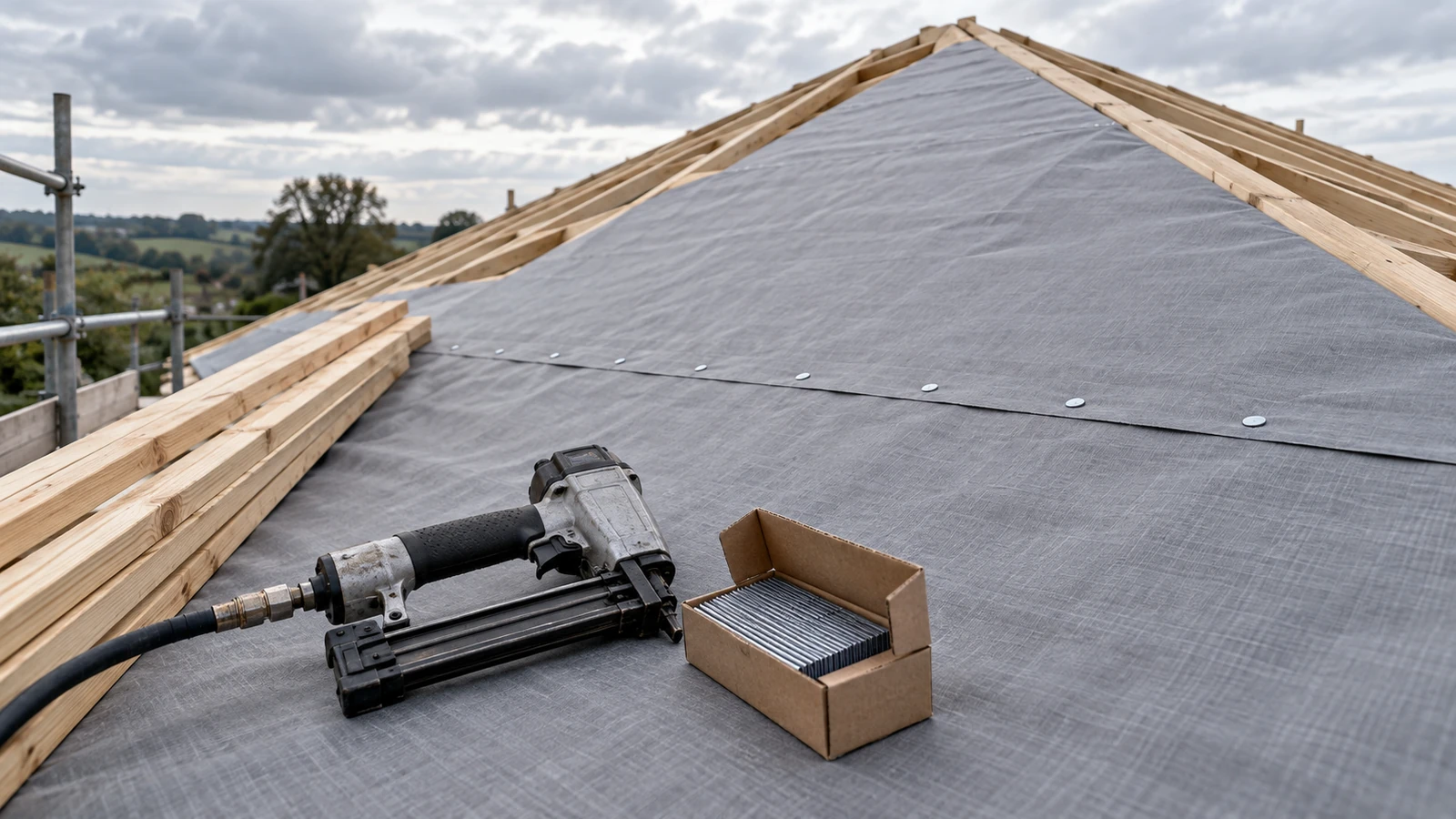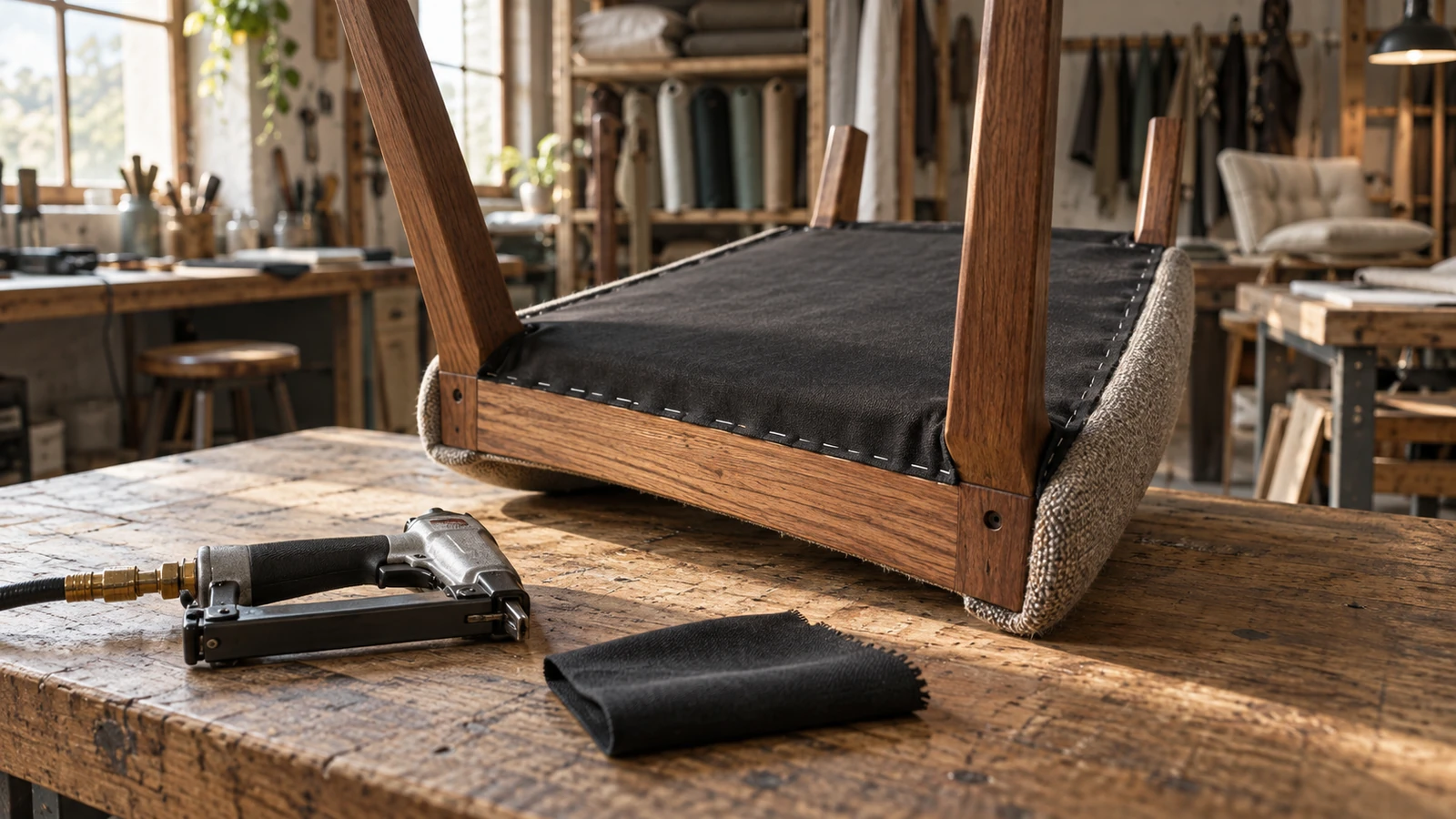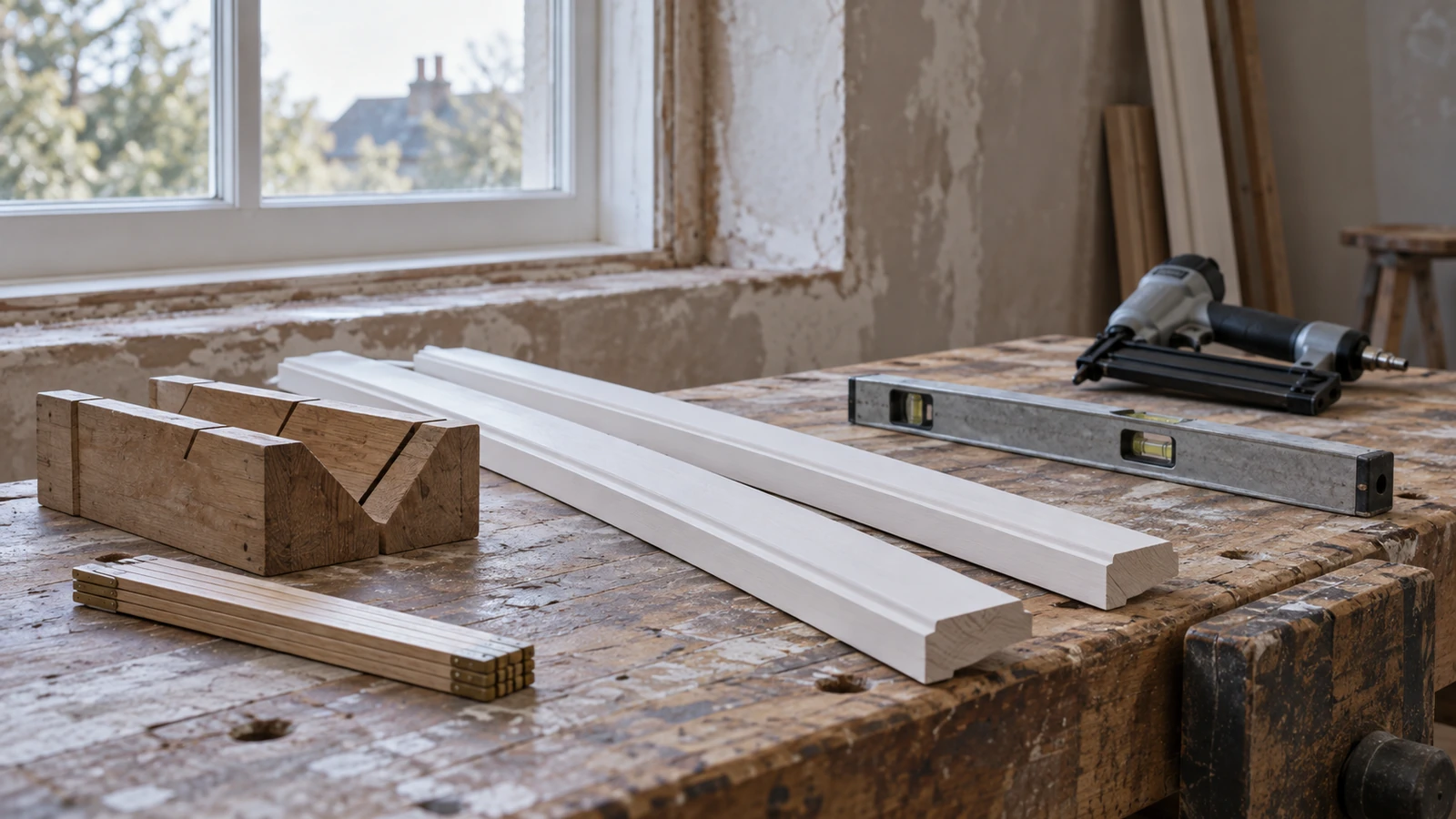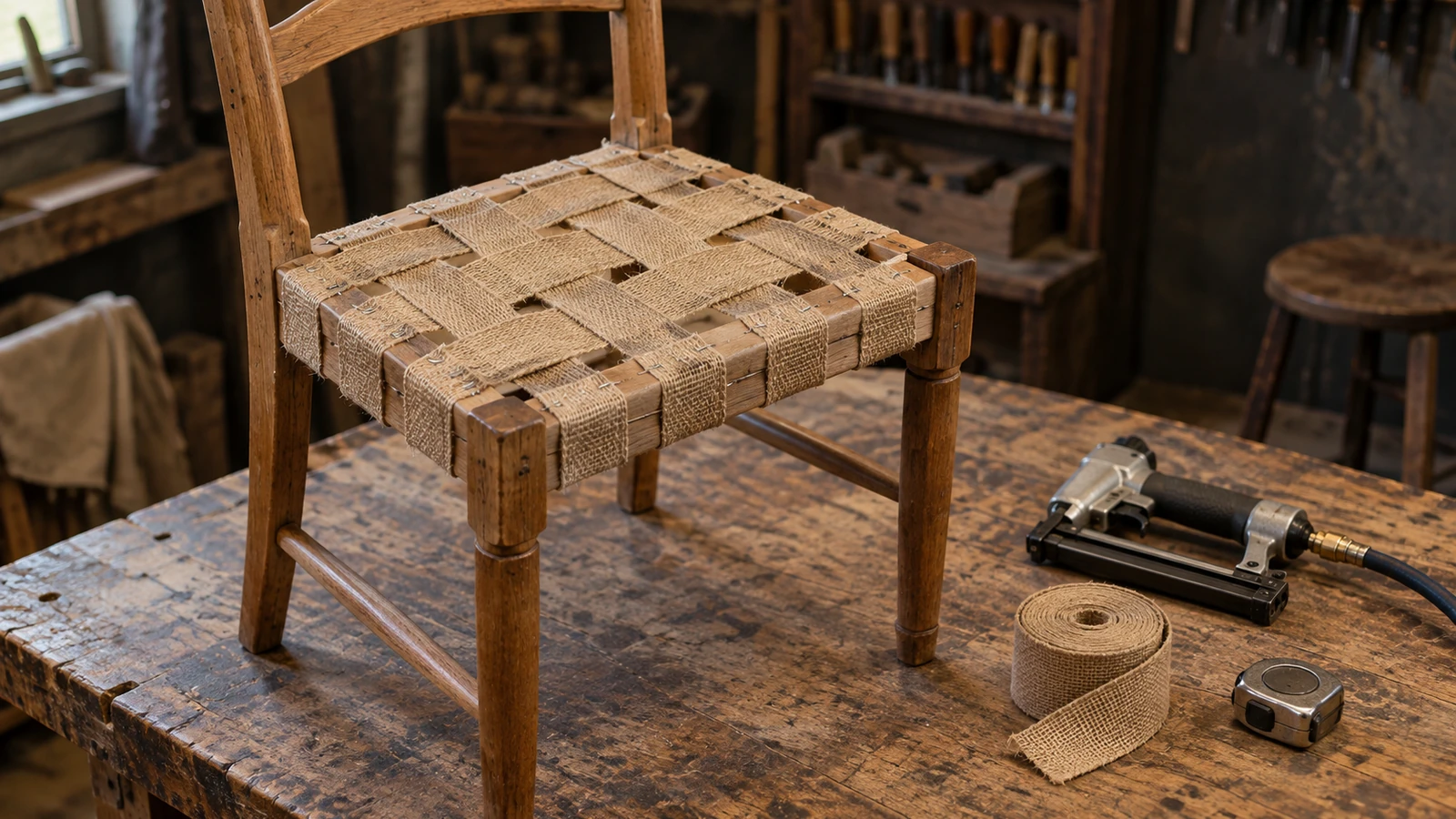

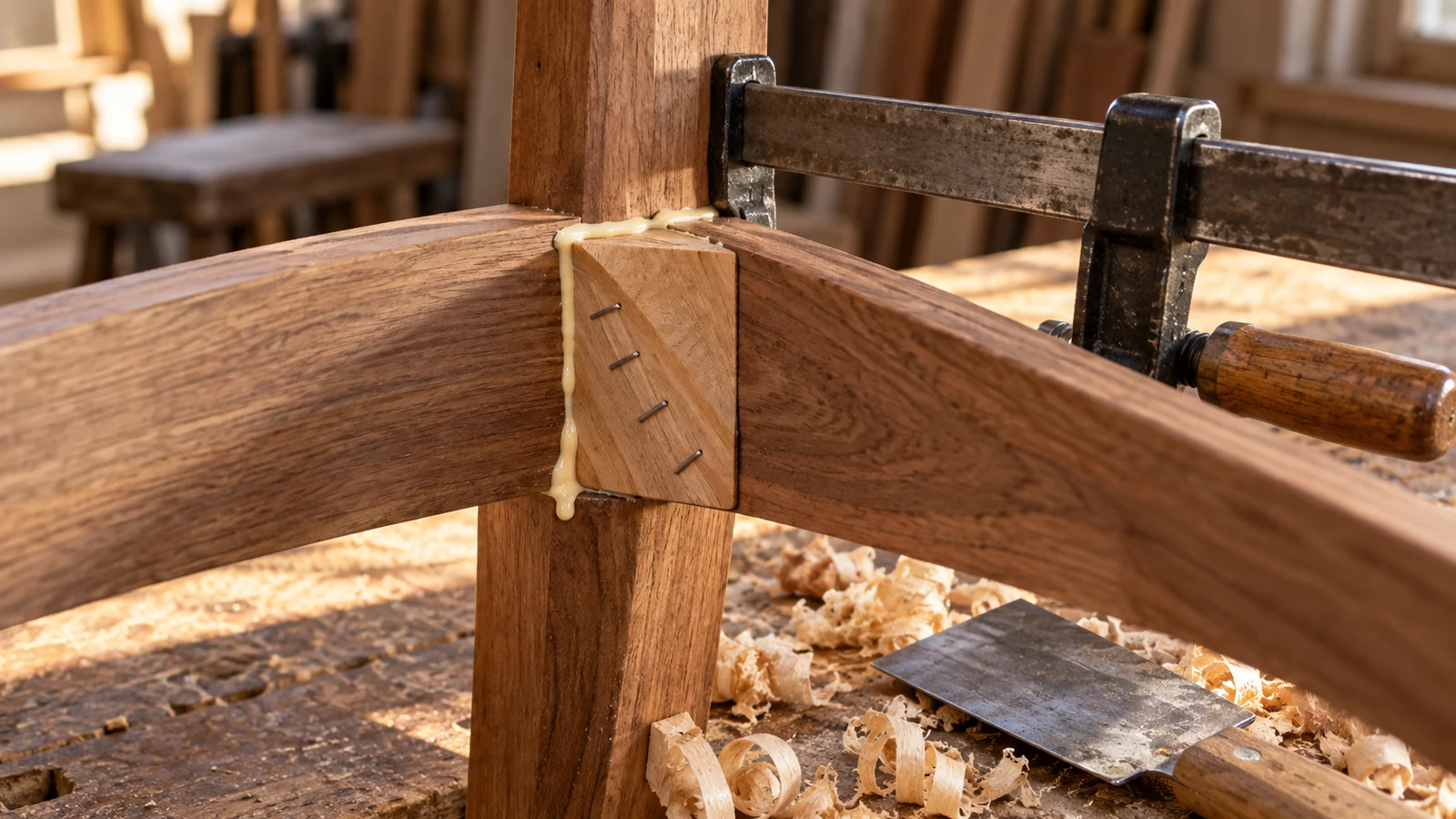
Staples for furniture frame corner blocks are placed inside a closing glue window. The block has to pull the rail and stile together, hold the corner square, and stay hidden behind the finished frame. Once the adhesive starts to set, a staple that is driven late cannot recover the joint.
ProAirNails recommends a corner card that names the frame design, block material, adhesive, open time, clamp position, staple size, tool, and inspection point. That card keeps the sample and the production line talking about the same assembly.
Decide what the corner block is doing
A block can be a structural gusset, a gluing surface, a screw-holding pad, or a temporary assembly aid. Write the role down before choosing a staple. A block that carries load needs a different validation path from a block that only keeps two rails aligned while the adhesive cures.
The AWI casework supplemental guidance discusses joints, interfaces, and hardware context for architectural woodwork. Use it to frame the drawing questions, then approve the physical corner on the real frame.
Map staples for furniture frame corner blocks by joint role
| Role | Staple objective | Acceptance question |
|---|---|---|
| Gusset | Hold the corner square while the glue cures | Does the joint close without a gap? |
| Rail and stile | Resist handling before the adhesive sets | Does the frame stay square after clamping? |
| Screw pad | Keep the block in place for later hardware | Does the staple stay clear of the screw path? |
| Assembly aid | Position the parts for the press or clamp | Is the staple removed or hidden after cure? |
Mark the visible face and the hidden face on the same drawing. Furniture frames are often turned, upholstered, or finished after assembly, so a staple that sits near the surface can become a witness mark later.
Treat the glue window as a process variable
Read the adhesive data sheet for open time, clamp time, and substrate compatibility. Then measure how long the crew actually needs to spread, place, staple, and clamp the corner. If the window is shorter than the step, the process needs to change before the staple does.
Keep the adhesive, the block, and the staple in one approval. A clean staple sample proves nothing if the glue was already skinned over when the block was placed. For staples for furniture frame corner blocks, the clock starts when the adhesive is spread, not when the block is finally seated.
Place the crown where the load path needs it
- Keep the crown clear of the visible face and the final upholstery line.
- Place staples along the block in the direction that resists the joint opening.
- Stagger positions when two rows are used so the block is not split along one line.
- Check the tool nose angle before driving; an angled crown loses bearing.
- Photograph the corner before clamping and after cure.
For staples for furniture frame corner blocks, crown placement is a joint decision. Moving the staple closer to the edge may look tidy on the bench and still open the corner under handling.
Check the assembly on the bench, not just the sample board
Build a complete corner with the production rails, stile, block, adhesive, clamp, and tool. Measure the diagonal and the joint gap before and after cure. Then handle the frame the way the line will handle it, including lifting and stacking.
The ASTM F1667 driven-fastener reference covers staple dimensions, materials, and finishes. It does not approve a furniture frame joint, so the physical corner and the adhesive schedule remain the controlling evidence.
Watch for the three common failure signals
| Signal | Check first | Do not assume |
|---|---|---|
| Open joint after cure | Glue open time, clamp, block fit, and staple direction | More staples will close a starved joint |
| Sunken crown | Pressure, crown width, material hardness, and tool depth | A longer leg protects the surface |
| Split block | Edge distance, staple position, block material, and pilot path | Harder material always solves splitting |
Separate feed problems from joint problems. A double feed belongs to the magazine or collation investigation; a split block belongs to the joint geometry or the material.
Keep tool safety and access in the procedure
Pneumatic staplers can cause serious injury. The NIOSH nail-gun safety guidance highlights training, protective equipment, and controlled triggering. Do not defeat a safety contact to reach a tight corner; change the fixture or the assembly order instead.
ProAirNails can help buyers compare staples, review related pneumatic nails and air staple pins, and submit a frame brief through Contact Us.
Approve the block, the glue, and the staple together
Retain a cured corner, the adhesive label, the staple strip, the carton label, and the tool setting. Record the diagonal measurement, the joint gap, the block material, and the clamp time. At reorder, compare crown, leg, gauge, point, finish, strip geometry, count, and lot identity.
The approval for staples for furniture frame corner blocks should state which frame design and adhesive schedule it covers. If the block material, glue, clamp, or handling route changes, reopen the corner review. ProAirNails keeps the retained corner attached to that boundary.
FAQ
What decides the choice of staples for furniture frame corner blocks?
The block role, frame material, joint geometry, adhesive schedule, clamp method, and tool access decide the staple.
Is the block always structural?
No. A block can be a gusset, a screw pad, or an assembly aid, and each role needs a different acceptance check.
Why does glue open time matter?
A staple driven after the adhesive skins over cannot recover the bond, even if the corner looks closed.
Should the staple be visible after upholstery?
No. Keep the crown inside the concealed zone and check the finished frame before release.
How many staples should a corner use?
Use the drawing and the physical trial. More staples can split the block or starve the joint.
What should the corner sample include?
Include the cured corner, adhesive label, staple strip, carton label, tool setting, and measurement record.
What changes trigger a new corner trial?
Review changes to block material, frame parts, adhesive, clamp, staple, tool, or handling route.
Can a sample board approve production?
Only when the block, joint, adhesive, and clamp match the production assembly.
What should a frame RFQ include?
Send the frame drawing, block detail, adhesive, tool, candidate staple, quantity, and inspection requirement.
What is the final corner question?
Ask whether the joint closes square, the glue cure is complete, and the corner stays hidden through finishing.