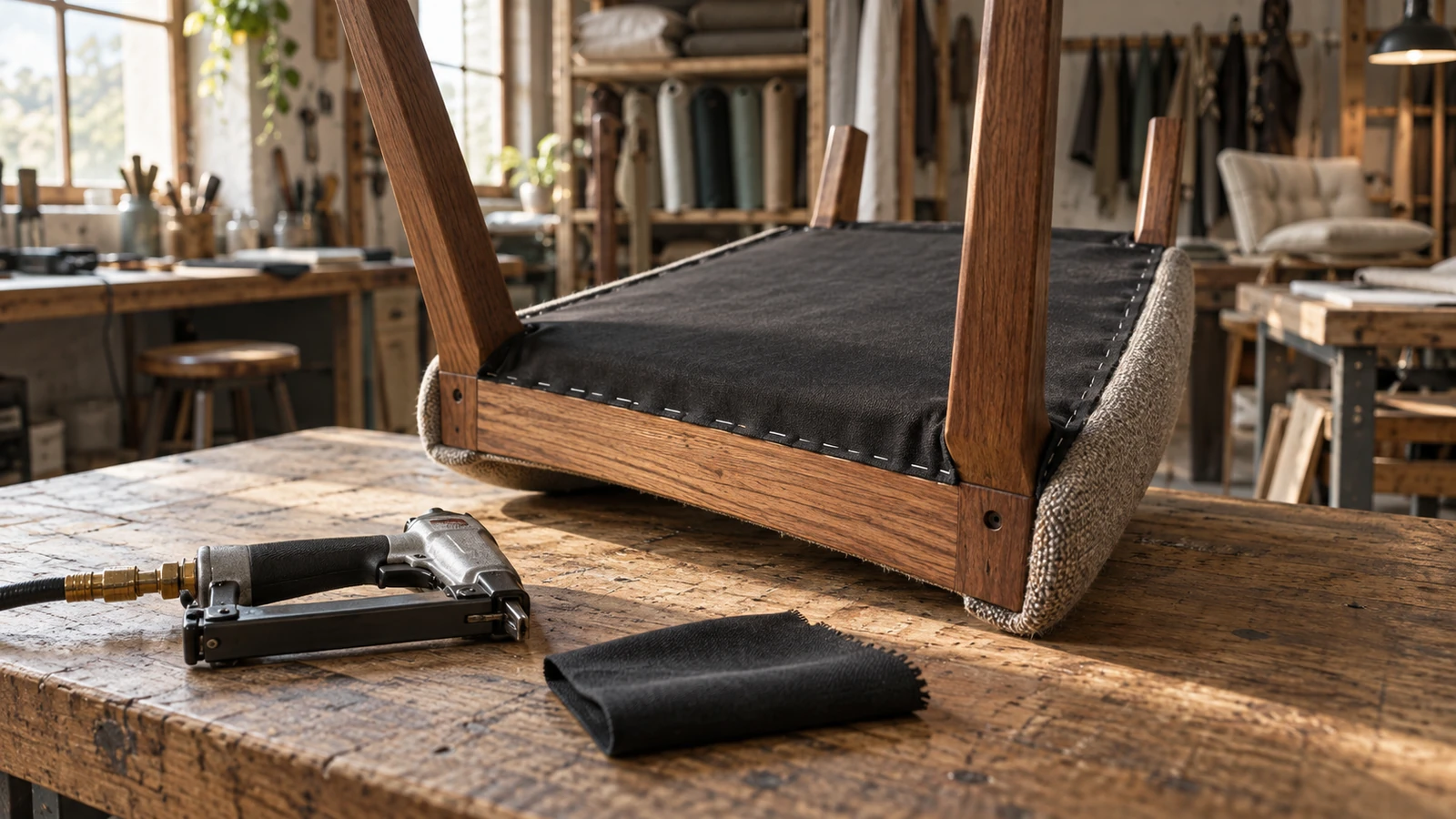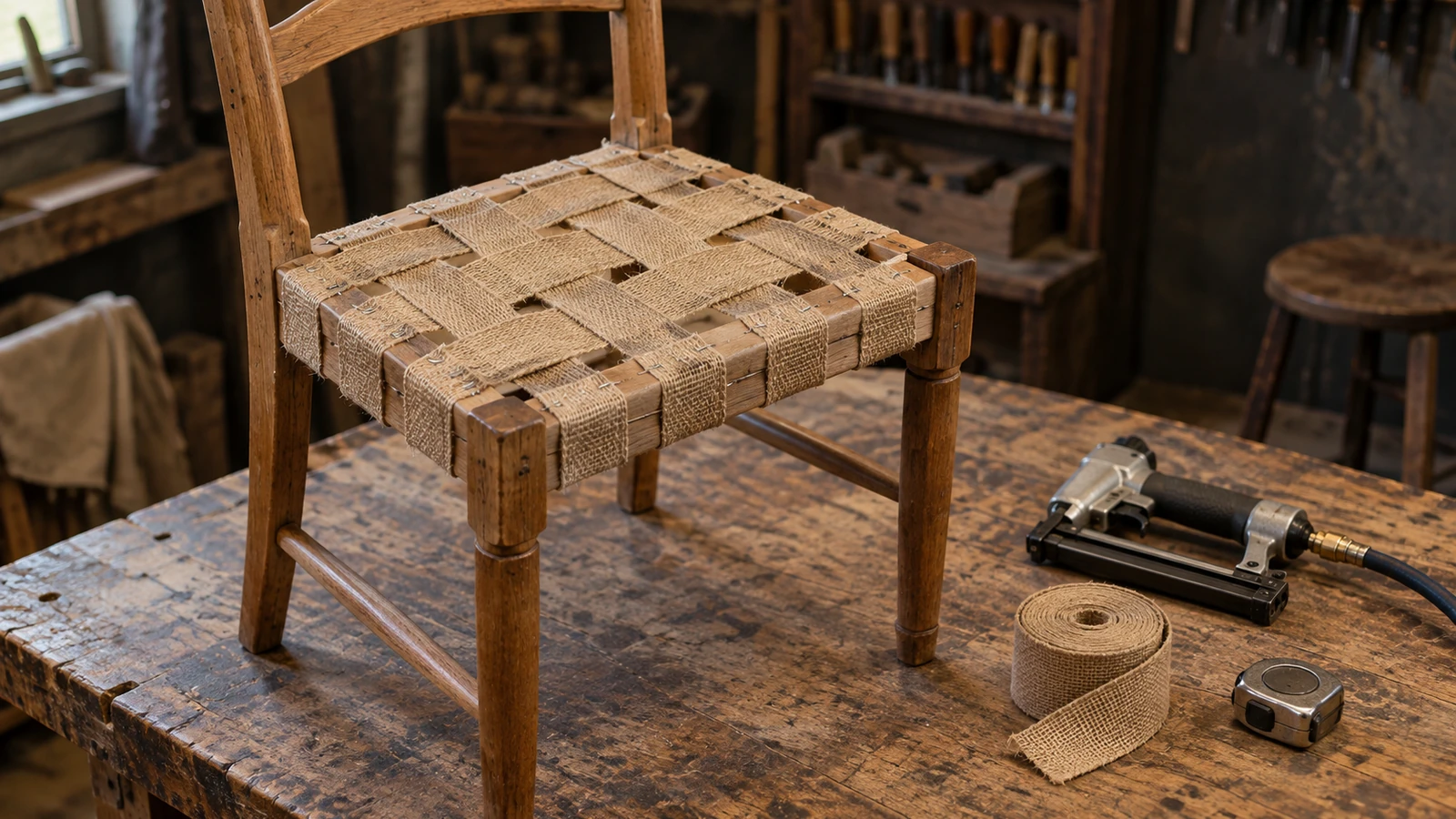

Staples for upholstery need to hold fabric without cutting the weave, showing through the finished face, or loosening when the material is tensioned. Leg length is only one part of the decision. Crown width, wire, point, tool setting, fabric construction, backing, spacing, and edge distance all shape the result.
A useful upholstery trial follows the load path from fabric to substrate. It compares the staple and the installation method together instead of asking whether a staple is “strong” in isolation. This is especially important when a buyer moves from one textile, foam, board, or frame to another.
Map the fabric and backing before choosing a staple
| Material detail | Why it changes the choice | Record |
|---|---|---|
| Fabric weave | Loose or open weaves can be cut or pulled by a narrow crown | Fiber, weave, stretch, visible face |
| Backing | Wood, board, plastic, or composite changes penetration | Thickness, density, edge distance |
| Tension | Higher pull can expose spacing and crown-support problems | Application method and tension sequence |
| Finish | Marks may appear after folding, trimming, or cleaning | Visible-face acceptance rule |
Keep a fabric coupon and backing sample with the specification. A photograph alone cannot show how a staple behaves through a real weave. If the fabric is supplied by a customer, retain the lot or roll reference used in the trial.
For staples for upholstery, a fabric lot is part of the test identity. Two rolls can look similar while responding differently to tension, cutting, and crown pressure. Retaining the coupon makes a later comparison much more honest.
Choose crown support before maximum depth
A longer leg may increase penetration, but it does not automatically improve fabric retention. If the crown is too narrow, it can concentrate force and cut the weave. If the crown is too wide for the tool or application, it may leave a visible mark or fail to seat properly.
Test the planned staple and one nearby alternative. Use the same tool, air pressure, nose position, and operator. Compare the fabric after tensioning, folding, trimming, and a short hold period. Record pulled fibers, crown marks, proud legs, rebound, and any loose edge.
What staples for upholstery should prove
The phrase staples for upholstery should lead to a complete test record: material, crown, leg, tool, spacing, tension, finish, and result. That record is more useful than a generic statement that the staple is suitable for furniture.
Build a tension-path test
- Fix a coded fabric coupon to the selected backing.
- Mark the staple line, corner radius, spacing, and edge distance.
- Apply the real tension sequence rather than a single pull.
- Inspect the fabric face, underside, and staple line after handling.
- Repeat with the nearby staple or setting used for comparison.
This method reveals whether the failure begins at the crown, the fabric, the leg, the substrate, or the spacing. It also shows whether a repair or re-tension step creates new damage. Keep the failed samples; a clean sample without a retained failure mode is not a complete record.
Separate holding from appearance
| Result | Holding interpretation | Appearance interpretation |
|---|---|---|
| Fabric pulls through | Support or spacing may be insufficient | May show a line of damage on the face |
| Leg rebounds | Tool, substrate, or leg geometry needs review | Can create a raised mark or loose edge |
| Crown cuts weave | Load is concentrated at the wrong area | Visible fraying may worsen after handling |
| Clean seat | Still confirm performance after tension and time | Check under the planned lighting and finish |
Furniture buyers should define an appearance limit separately from a holding limit. A staple can hold while leaving a mark that the customer rejects. Conversely, a clean face can hide a loose edge that fails during use.
Ask the supplier for application evidence
Request the wire description, crown, leg length, point, finish, collation, tool family, and packing quantity. Ask whether the supplier has tested the same fabric and backing or only a generic board. If the application changes, ask for a new sample instead of assuming that the same series will behave identically.
ISO 12944 discusses corrosion protection systems for steel structures and exposure categories; the ISO 12944 reference can help teams frame environmental questions. The ISO 9001 overview can help define the record and change-control side. Neither replaces a fabric-and-backing test, which remains the decisive evidence for upholstery work.
Keep the approved staple tied to the furniture program
Save the sample code, fabric lot, backing, tool setting, spacing, carton label, and finished photographs. At reorder, verify the same product code and package count. If the upholstery program adds a new textile, foam, edge, or frame material, reopen the trial rather than copying the previous approval.
ProAirNails supports buyers comparing staples, reviewing pneumatic nails, checking brad nails, and discussing B2B requirements through Contact Us.
FAQ
What are staples for upholstery selected for?
They are selected to hold fabric to a backing while controlling weave damage, visible marks, depth, spacing, and tool compatibility.
Is longer always better for upholstery?
No. The leg must suit the fabric, backing, edge distance, and tool; extra depth can damage the substrate or create rebound.
Why does crown width matter?
Crown width changes how force is distributed across the fabric and can affect both retention and visible weave damage.
Should I test the real fabric?
Yes. Generic fabric or paper cannot reproduce the weave, stretch, coating, and finish behavior of the production material.
What causes fabric pull-through?
Possible causes include narrow crown support, excessive tension, poor spacing, weak backing, sharp geometry, or a tool setting problem.
How should upholstery staples be spaced?
Spacing should follow the material, edge, curvature, tension, and design requirement; confirm it on a coded trial rather than using one universal number.
What should a failed sample show?
Retain the fabric, staple line, backing, tension notes, tool settings, and photographs so the failure mode can be discussed clearly.
Can one staple series cover every furniture fabric?
No. Fabric, backing, tension, edge geometry, and appearance requirements can change the approved fastener.
Should the finished face be inspected under special lighting?
Use the lighting and viewing distance relevant to the customer, because marks and shadows can change with the environment.
How does ProAirNails support upholstery buyers?
ProAirNails can organize staple specifications, sample tests, packaging details, and tool-fit questions for a defined furniture program.