
When staples pull through fabric, the crown has exceeded the load the local textile and backing system can distribute. The visible tear can be influenced by weave direction, fabric tension, edge distance, staple crown and wire, drive depth, spacing, foam compression, backing hardness, repeated loading, and how the material was folded.
Preserve the failed zone without removing the staple. Mark the direction of applied tension, the fabric face, the edge or fold, and the order in which nearby staples were installed.
Read the opening around the crown
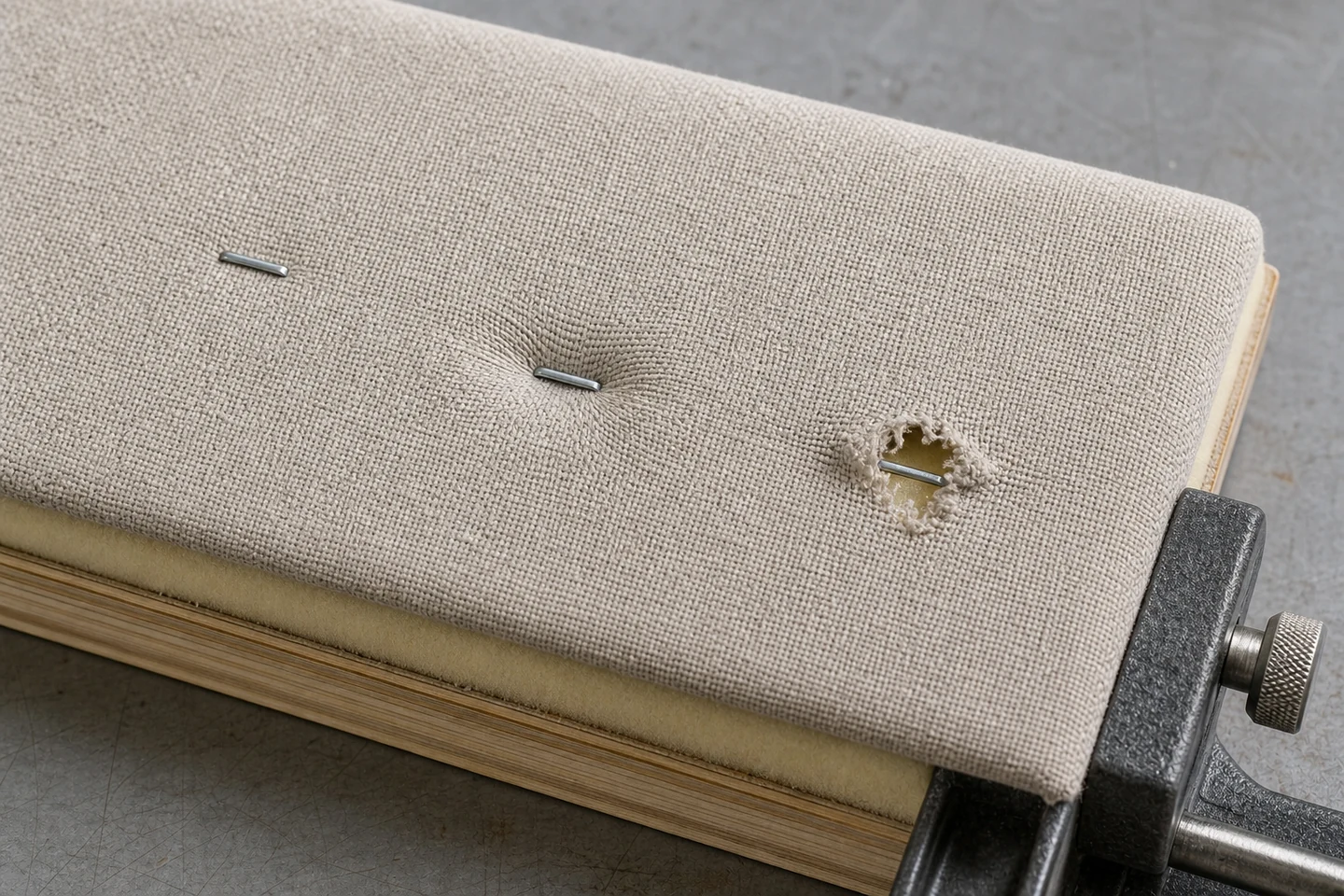
Photograph the face and reverse side under diffuse and raking light. Note whether yarns are cut, pushed aside, stretched into a long slot, or torn from an edge. Record whether the crown is level, deeply embedded, tilted, or resting on a fold.
A clean local slot can suggest concentrated bearing or cut yarns. A broad distorted area may indicate sustained tension, insufficient backing, or load transferred from a larger upholstery section.
Rebuild the complete layer stack
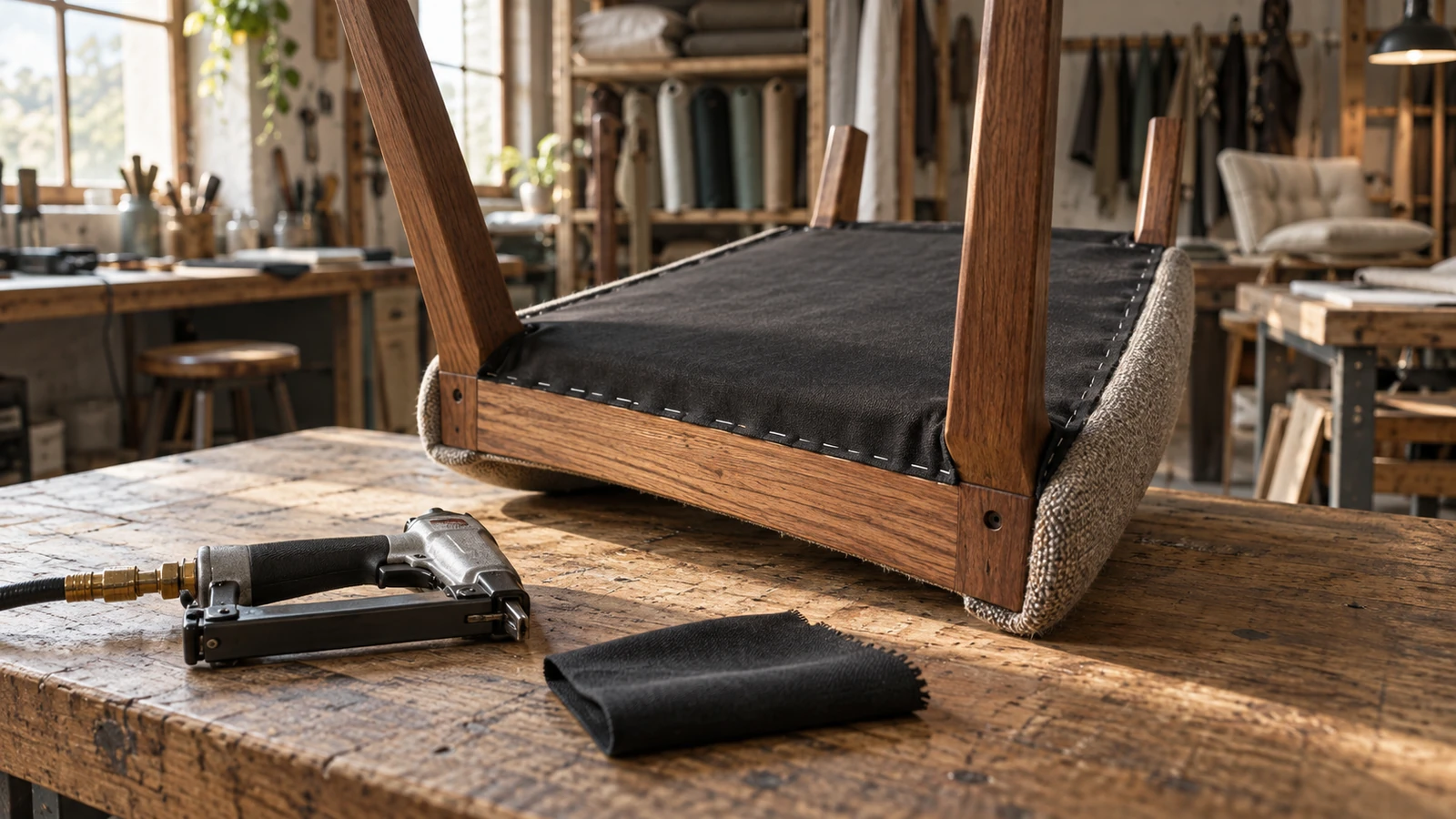
List every layer in order: decorative fabric, liner, batting, foam, webbing, folded seam, wood or board, adhesive, and any gap. Measure the compressed stack at the fastening location where practical. A workshop test on fabric directly over solid wood will not represent a production fold over foam.
Keep material direction visible. Woven fabric can resist differently along warp, weft, and bias, while coated or nonwoven materials may fail through different mechanisms.
Create a horizontal load-path strip
Build a representative strip with several clearly separated zones. Keep the staple series, tool, material lot, and operator constant while changing one factor in each zone. Include an approved control and an intentionally borderline example so the acceptance boundary is visible.
| Zone | Variable | Evidence to compare |
|---|---|---|
| A | Working depth setting | Crown bearing without yarn crushing |
| B | Reduced or increased fabric tension | Distortion around the crown |
| C | Backing or layer support | How the stack compresses during drive |
| D | Spacing and permitted edge distance | Whether loads combine or reach an edge |
Separate installation damage from service loading
Inspect every sample immediately after fastening, then again after the approved conditioning or load sequence. A crown that has already cut yarns during installation should not be classified as a later pull-through. Conversely, an intact installation may elongate after repeated tension or flexing.
Use the product's actual load direction. A straight pull strip may not represent a corner wrap, seat deck, curved rail, or repeated user movement. Record load, displacement, cycle count, conditioning, and stop criteria when those tests are part of the quality plan.
Control crown pressure before changing staple size
Confirm the compatible staple, tool, nose, pressure, and depth-control procedure. Hold the tool square with stable backing support. Excessive drive can sink the crown and concentrate load on a few yarns, but insufficient seating can leave a raised crown that catches or allows movement.
A wider crown or heavier wire changes bearing behavior but is not automatically suitable for the tool, appearance, substrate, or joint. Compare only approved candidates in the full layer stack.
Set inspection points along the upholstered edge
Identify corners, folds, seams, cut edges, transitions, and high-tension zones that need closer inspection. Define staple spacing and the permitted distance from fabric edges and substrate edges. Record acceptable crown appearance from normal viewing distance and close range.
The limitation is that a sample strip does not establish complete furniture durability, occupant safety, textile life, or production conformity. Those decisions require the applicable design, test method, sampling plan, and responsible authority.
Review the Air Staple Pin category and the wider pneumatic fastener range. Send staple reference, tool, textile, layer stack, tension direction, spacing, and failure photographs through the inquiry page when investigating why staples pull through fabric.
FAQ
Does a wider staple crown always stop fabric pull-through?
No. A wider crown can distribute bearing differently, but fabric construction, depth, tension, backing, edge distance, spacing, wire, and tool compatibility still determine the result.
Can lower air pressure prevent the crown from cutting fabric?
Drive control can affect crown embedment, but pressure alone does not define depth and must remain within tool specifications. Check nose contact, support, stack compression, and the approved adjustment method.
Should torn fabric be tested after the staple is removed?
Photograph and preserve the original position first. Removing the staple can enlarge the opening or disturb yarns, so extraction should follow the investigation and repair procedure.
A representative load-path strip makes staples pull through fabric a controlled material-system question rather than a last-stage upholstery surprise.