
Wire collated coil nails for pallet repair enter a less predictable joint than nails used on a new-pallet line. The repair crew may meet dry boards, damp boards, old holes, broken fasteners, crushed fibres, replaced blocks, and components with an uncertain history. That variation makes the repair ticket part of the fastener decision.
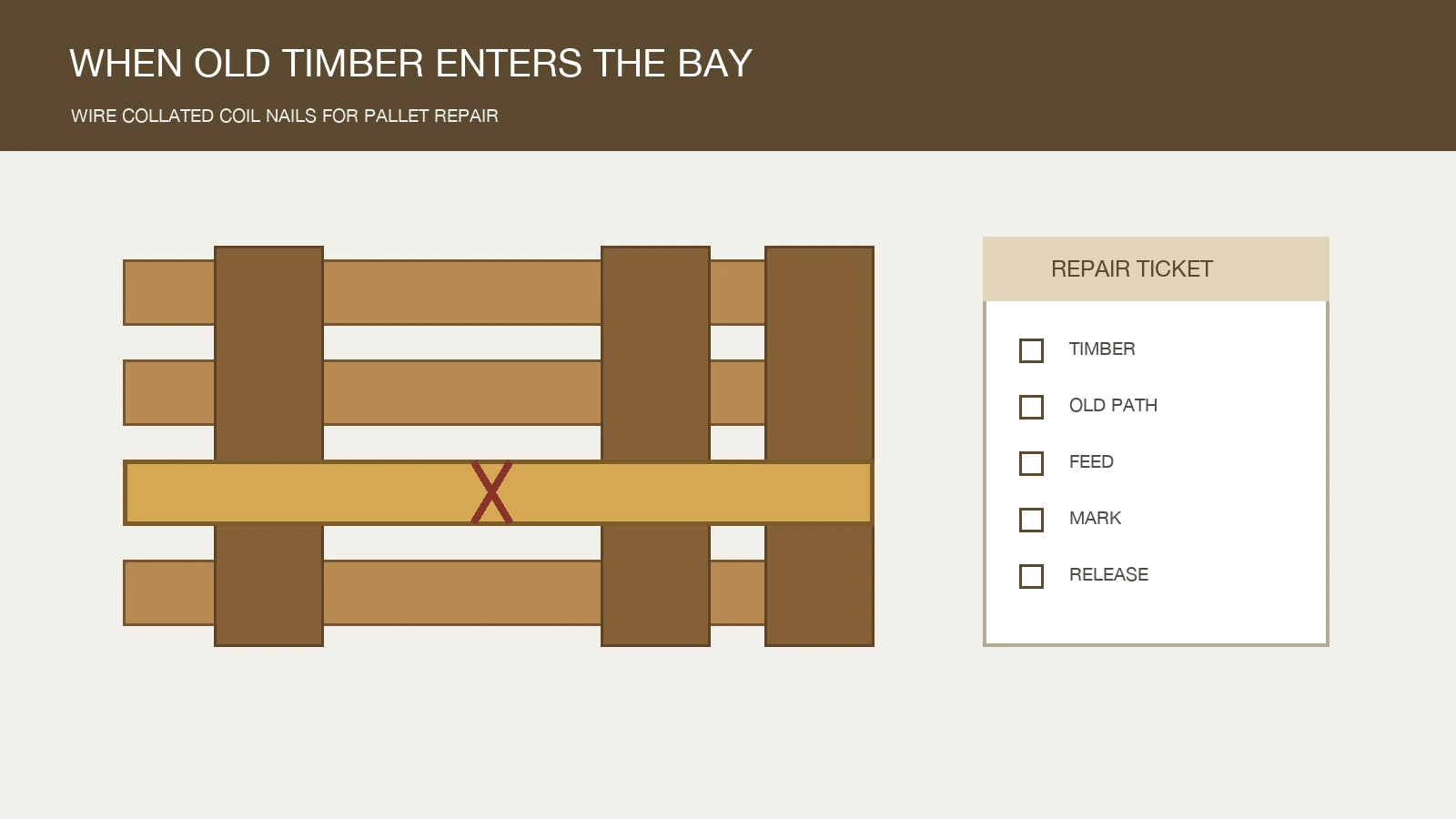
ProAirNails recommends opening the ticket before the nailer is loaded. Record why the pallet was held, which component will be replaced, what marking or customer rule applies, and what evidence will release it. The fastener is then tested against a defined repair rather than a generic piece of timber.
Open a repair ticket at the receiving decision
The first choice is not nail size. It is whether the unit belongs in the approved repair stream. Photograph the damage, identify the pallet or customer program, and note any contamination, severe structural loss, or marking issue that requires escalation. A nail cannot make an unapproved component acceptable.
| Ticket field | Repair-bay observation | Decision owner |
|---|---|---|
| Damage location | Deck, stringer, block, edge, or previous repair | Inspector or repair lead |
| Timber condition | Split, crushed, wet, decayed, contaminated, or sound | Quality and program rule |
| Component action | Retain, remove, replace, or reject the unit | Authorized repair process |
| Release evidence | Joint photos, drive check, mark review, final inspection | Named approver |
Keep the fastener lot on the same ticket. If the repair later fails, the team should be able to distinguish timber damage from tool, nail, or handling changes.
Define what wire collated coil nails for pallet repair must handle
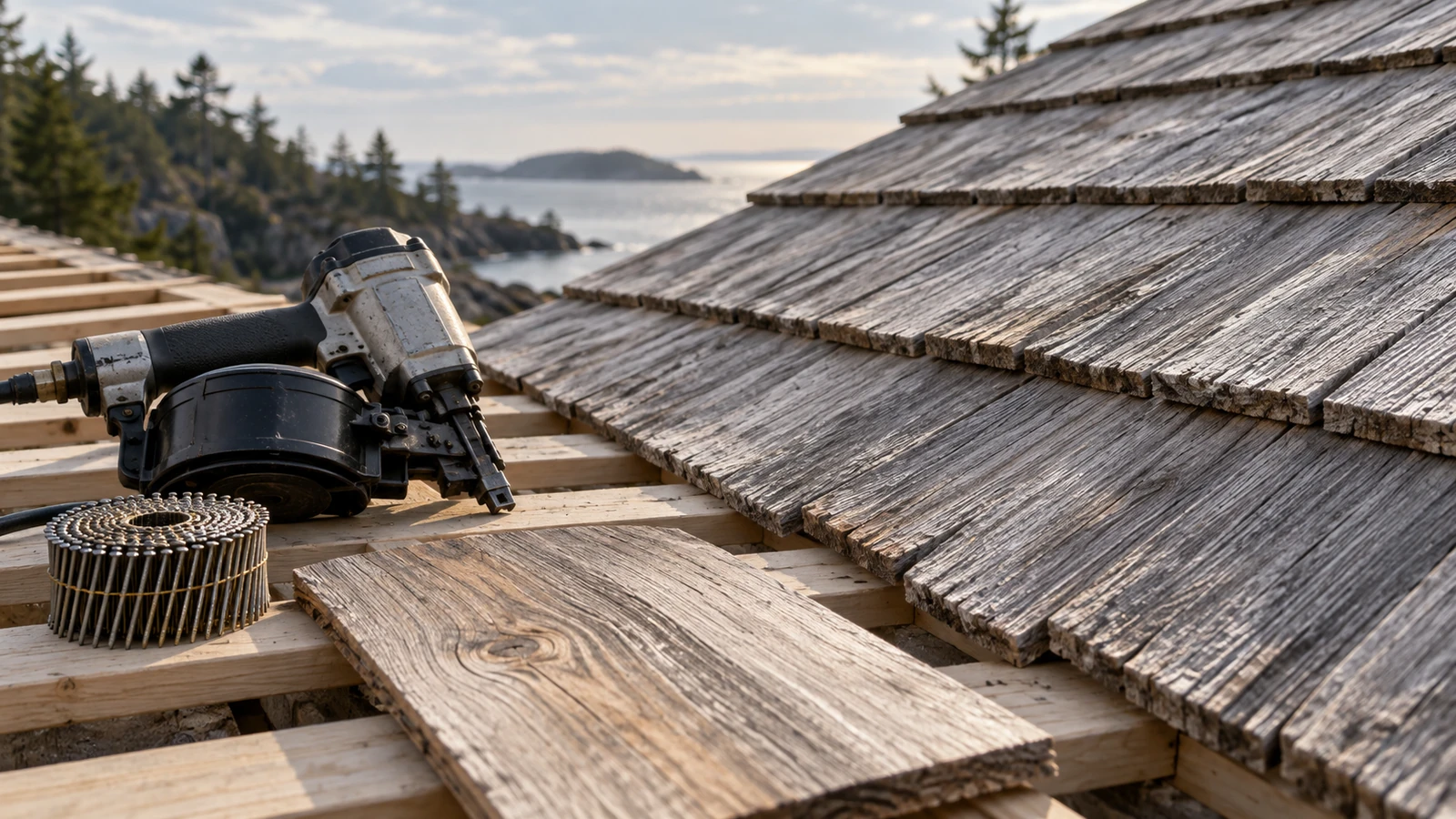
The specification should name length, wire diameter, head, point, shank, coating, collation angle, wire arrangement, coil diameter, coil count, and compatible nailer. For a repair job, add the approved component and the limits on existing holes or damaged fibre.
Wire collation can support compact coils and repetitive feeding, but the label does not prove that every nailer, wire weld, or repair posture will run cleanly. Test the intended coil in the actual tool and observe whether protruding wire, a distorted coil, or an awkward tool angle affects the joint.
Read the old timber before driving
Previous fastener paths matter. Do not place a new nail blindly into an old hole or directly beside a split. The repair instruction should define acceptable placement and component replacement. If the board cannot provide sound material around the planned path, stop and follow the program's rejection or replacement rule.
- Remove or control old fasteners using the approved repair method.
- Check both faces and edges for hidden exits, splits, and crushed zones.
- Mark the proposed path before the first shot.
- Use the repair nailer, pressure, support, and operator position.
- Inspect the finished pallet after turning, stacking, or handling.
This inspection is why wire collated coil nails for pallet repair need their own record. A new-board trial can establish baseline feeding, but it cannot reproduce every degraded joint that arrives at a repair bay.
Separate ordinary repair from regulated wood packaging decisions
When a pallet is intended for international trade, treatment and marking requirements may apply independently of fastener performance. The IPPC guide to regulation of wood packaging material discusses manufacturing, repairing, reusing, treatment, marking, and responses to non-compliance under ISPM 15.
Do not treat this article as authorization to apply, preserve, or replace a mark. National plant protection organizations and approved program rules control that decision. A repair shop should verify its authorization, material route, treatment obligations, and marking procedure before release.
Recreate repair movements during the feed trial
A bench trial keeps the tool straight and the timber still. Repair work may require reaching around a stringer, turning the unit, or driving near a previous joint. Recreate the permitted positions without bypassing tool-safety procedures. Count feed interruptions separately from timber or placement defects.
| Trial lane | Observe | Keep as evidence |
|---|---|---|
| Coil loading | Coil shape, magazine fit, wire condition, first feed | Coil label and setup photo |
| Repair sequence | Indexing, empty shots, double feeds, tool access | Shot count and interruption log |
| Joint result | Head seating, bending, split, exit, component contact | Both-face photos and disposition |
| Handling check | Board lift, looseness, new cracks, snag risk | Final ticket and inspector name |
The table keeps two problems from being blended. A clean feed does not approve weak timber, and a sound joint does not erase repeated magazine interruptions.
Use standards without stretching their scope
The ASTM F1667/F1667M driven-fastener specification gives buyers a shared vocabulary for nail dimensions, materials, and finishes. Its scope does not turn wire collation and real-tool feeding into an automatic pass, so the repair-bay trial remains necessary.
Likewise, an ISPM 15 treatment mark addresses a phytosanitary program; it is not proof of pallet structural condition or fastener holding. Keep the marking decision and the joint decision on linked but separate lines of the ticket.
Build the reorder from failed tickets too
ProAirNails can align the repair program with coil nails, related pneumatic nails, alternative staples, and a sample request through Contact Us. Send pallet type, component drawing, timber range, nailer model, current fastener, repair rule, pack quantity, destination, and required documents.
At reorder, compare the approved coil and carton with the new lot. Review nail dimensions, shank, point, finish, weld or wire position, coil diameter, count, label, and packing. A failure log for wire collated coil nails for pallet repair is especially useful: it shows which defects the next sample must challenge instead of preserving only the best result.
State the repair boundary in the release
The approval for wire collated coil nails for pallet repair should name the pallet program, component, timber condition, placement rule, tool, and inspection route it covers. It cannot prove untested damaged timber, unauthorized marking work, or a different pallet design.
ProAirNails treats that boundary as practical purchasing data. When the next shipment or repair instruction changes, the team can see whether to accept the reorder, run a focused check, or reopen the complete trial.
FAQ
Why does pallet repair need a separate coil-nail trial?
Used components can contain old holes, splits, crushed fibres, moisture variation, and access limits that are absent from a new-board test.
What goes on a repair ticket?
Record pallet program, damage, component, timber condition, planned action, fastener lot, tool, drive observations, marking review, and release decision.
Can a new nail be driven into an old hole?
Do not assume it can. Follow the approved repair placement rule and replace or reject material that cannot provide a sound path.
What should be checked on a wire-collated coil?
Check dimensions, shank, point, head, finish, collation angle, wire or weld condition, coil diameter, count, and nailer fit.
Does an ISPM 15 mark prove the pallet is structurally sound?
No. The mark belongs to a phytosanitary compliance system; structural repair and fastener acceptance require separate evidence.
Who can apply or replace an ISPM 15 mark?
That depends on the applicable national program and authorization. Confirm the rules with the responsible plant protection authority.
How should feed failures be counted?
Log empty shots, double feeds, indexing stops, wire interference, and adjustments separately from timber or placement defects.
What handling check follows a repair?
Use the approved pallet program's handling and inspection method, then look for board lift, looseness, new splits, or snag hazards.
Which changes trigger a new sample?
Review changes to nail geometry, wire, weld, coating, coil, tool, timber source, component, packing, repair rule, or marking procedure.
What should a buyer send ProAirNails?
Send the component sketch, pallet program, timber range, tool model, current sample, defect history, quantity, packaging, destination, and timing.